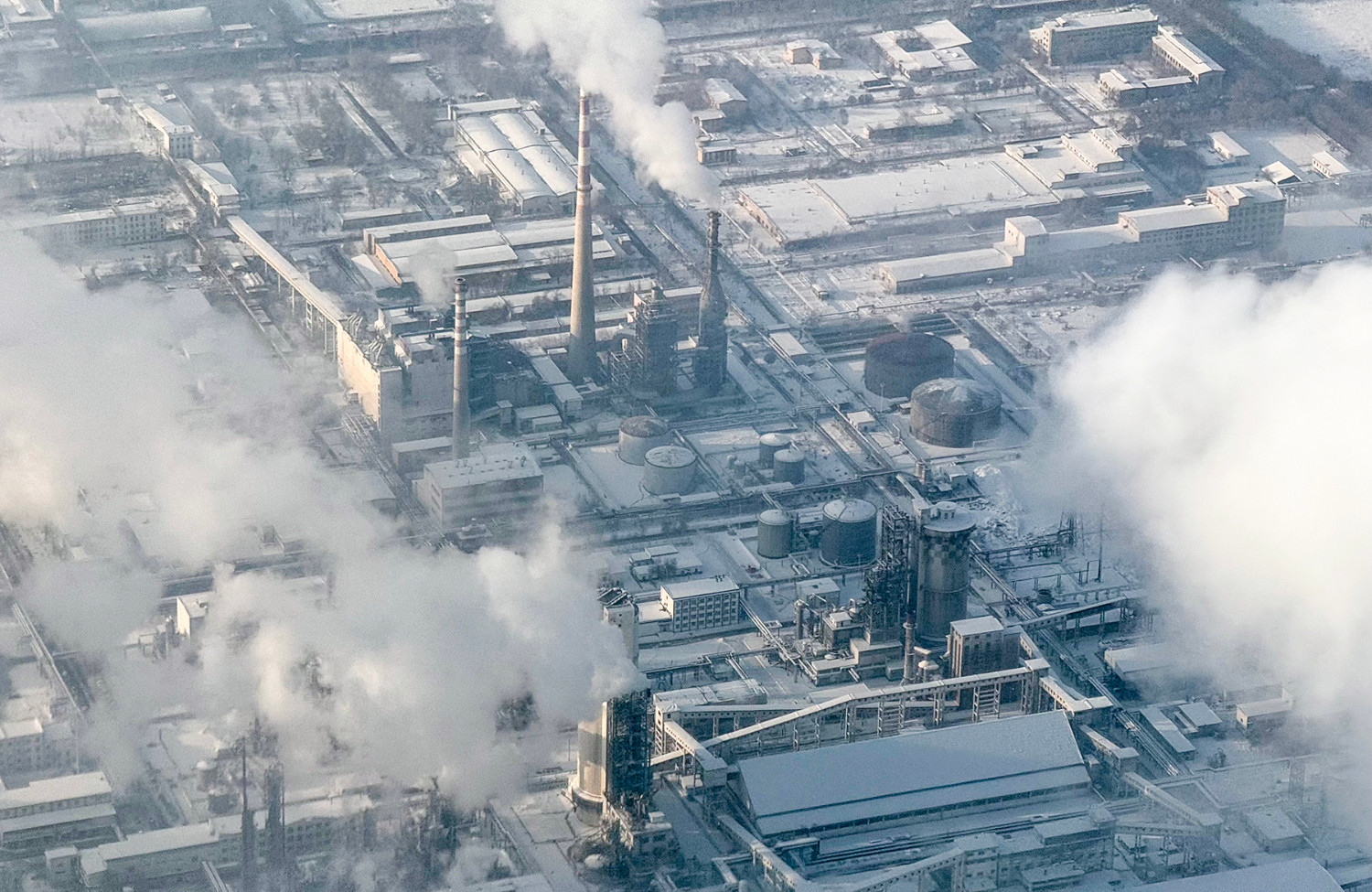
UK accused of ‘undermining human rights commitments’ over Xinjiang carbon capture aid
UK foreign aid helped to develop Chinese fossil fuel extraction in a region where the oil sector is associated with forced labour risks, a new investigation has found.
The Emperor’s new carbon credits? Silicon Valley’s non-existent offsets
Experts expect more than half of the voluntary carbon market to be carbon removals by 2030. The sales are happening already - but the removals are not.
Lauren Sneade reads Rosetta Elkin's "Plant Life: The Entangled Politics of Afforestation" and asks a controversial question: is the very concept of afforestation rooted in colonial violence?
Do ad-men dream of electric trees? Greenwash at the Science Museum
What does the future look like? According to the UK’s Science Museum, and by implication Shell, the oil and gas giant sponsoring this exhibition, it looks like a corporate expo.
In the last entry in our series of long reads explaining CCS, Bertie Harrison-Broninski investigates the reasons carbon capture projects have such a ropey track record.
Why Carbon Capture and Storage matters: overshoot, models, and money
In the second article in our CCS series, Bertie Harrison-Broninski explains why CCS has a different status to other saviour tech: its place in climate modelling.
What is happening with Carbon Capture and Storage?
In the first in a new series of long reads explaining CCS, Bertie Harrison-Broninski digs into how the tech works, whether we're on track with deployment, and what we can learn from CCS's track record.
Rethinking net zero: why Holly Jean Buck’s ‘Why Net Zero is Not Enough’ is not enough
There are a lot of issues with the net zero framework - Holly Jean Buck's new book could go further in imagining alternatives, says Bertie Harrison-Broninski.
Examining technical and nature-based options for greenhouse gas recovery
Most integrated assessment models seeking to develop emissions pathways for the world to stay under a global average temperature rise of 1.5˚C rely on the removal of significant concentrations of greenhouse gases from the atmosphere by 2050.
Carbon capture does not reduce emissions: these three case studies prove it
BY
Mark Z. Jacobson
Carbon capture causes more harm than good, and only serves to prolong fossil fuel industries, argues Professor Mark Z. Jacobson.
Opinion
How will capitalism react to climate collapse?
BY
Wim Carton and Andreas Malm
Abject failure to treat the causes of climate change, rather than the symptoms, has made solar geoengineering all but inevitable, say Wim Carton and Andreas Malm.
Opinion
Greenhouse gas removals urgently need good governance
BY
Faustine Wheeler
Governments are not doing enough to shape and regulate this newly burgeoning industry. The UK should lead the way with a new regulatory body, says Green Alliance's Faustine Wheeler.
Opinion
Carbon removal must not overshadow decarbonisation efforts
BY
Robert Watson
Overreliance on nascent technology is not something to be excited about, says former IPCC Chair Sir Robert Watson
Opinion
Can engineered biochar solve India’s agricultural emissions?
BY
Manish Kumar
Biochar expert Professor Manish Kumar explains the potential benefits of pyrolised plants.
Opinion
Enhanced weathering will not work without EU research funds
BY
Amann Thorben
Too many uncertainties exist around enhanced weathering for it to be implemented, despite significant potential. The EU must be less frugal with R&D or the private sector will step in and transparency will suffer, says Amann Thorben.
Opinion
Climate models need reform – the social justice risks of BECCS and afforestation show why
BY
Pamela McElwee
Removal tech will need transparency, accountability, and legitimacy to minimise impacts on local populations, says Pam McElwee
Opinion
Build Beyond Zero
BY
Bruce King
Could we go beyond removing CO2 from the atmosphere and actually use it in the building blocks of the future?
Podcasts
Carbon capture, Renewables
Are we closer to reaching clean energy than we might think?
Bertie is joined by Dr. Mark Jacobson, author of "Still No Miracles Needed," where the two discuss how existing technology can solve the climate crisis.
Bertie speaks to Wijnand Stoefs, Carbon Market Watch's policy lead on Carbon Removal, about how EU policy is developing around greenhouse gas removals.
Alasdair speaks to Kelly Stone, Senior Policy Analyst at ActionAid, about her time at COP27 and where international diplomacy is taking offset markets and their governance.
Are carbon removal targets unrealistic about land requirements?
Alasdair spoke to Dr. Kate Dooley, an author of the Land Gap Report which found that national policies for carbon removals "could push ecosystems, land rights and food security to the brink."
CCS: what are the right (and wrong) ways to do carbon capture and storage?
Bertie talks about the issues and benefits of different CCS technologies with Dr. Howard Herzog, a world expert on carbon capture, having studied it at MIT's Energy Initiative for over 30 years.
Is climate modelling undermined by economics and ideology?
Alasdair MacEwen talks to Associate Professor Wim Carton of Lund University Centre for Sustainability Studies about offset markets, carbon removal technologies, and IPCC modelling.
We believe in sharing information - but not yours.
Our funding comes from nonprofit foundations, not from selling your browsing data to companies. So we don't have a huge list of third parties for you to reject cookies from!
We only use necessary cookies for our website to function, and record aggregate data to keep track of our readership figures. We don’t store or share IP addresses visiting the front-end of our site.
If you sign up to our newsletter, we’ll safely store your contact details to use for that purpose, but otherwise, we only use necessary cookies for our website to function, and record aggregate data to keep track of our readership figures. We don’t store or share IP addresses visiting the front-end of our site.