This investigation was also reported in #1681 of Private Eye – click here to buy a copy.
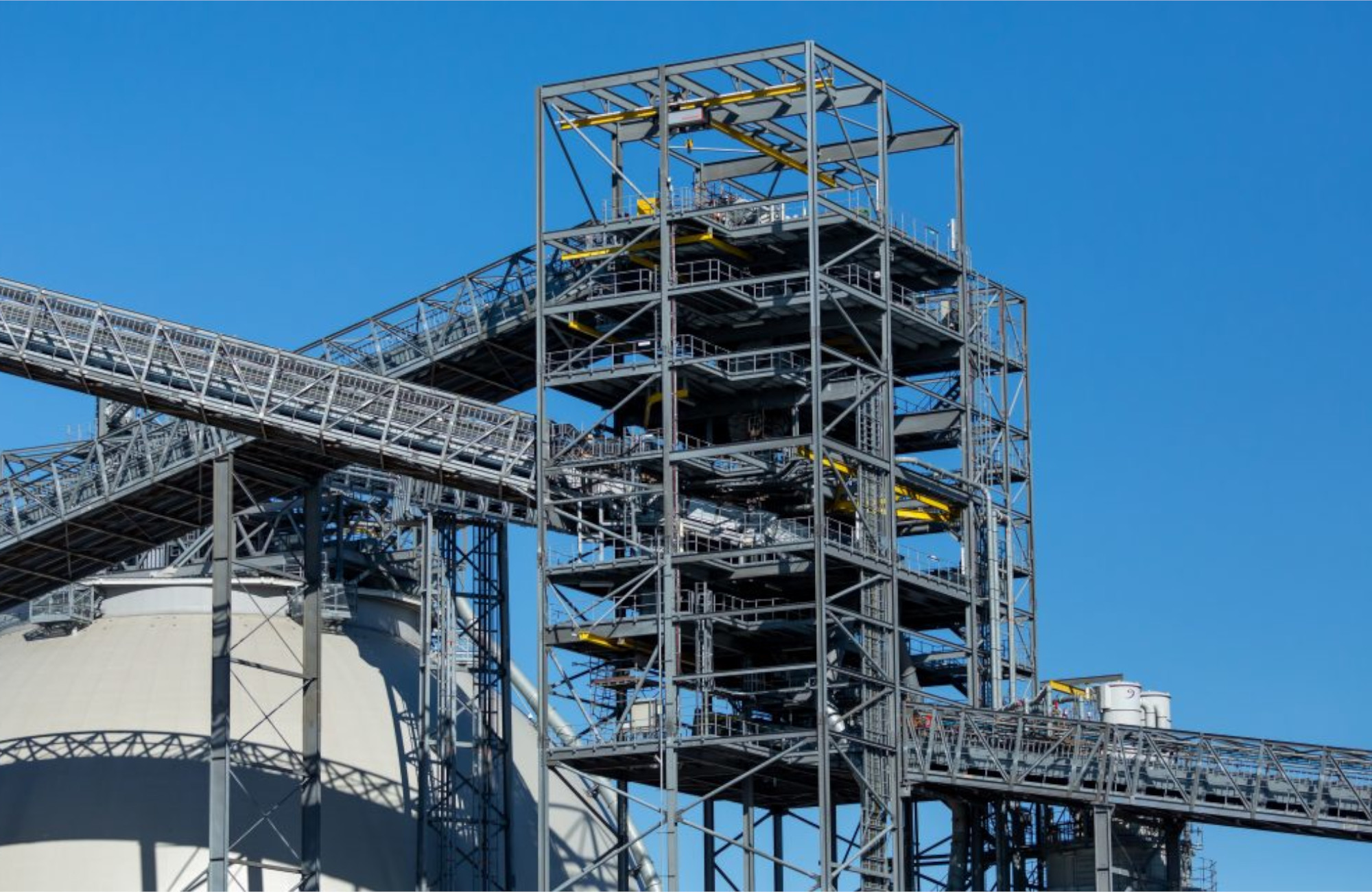
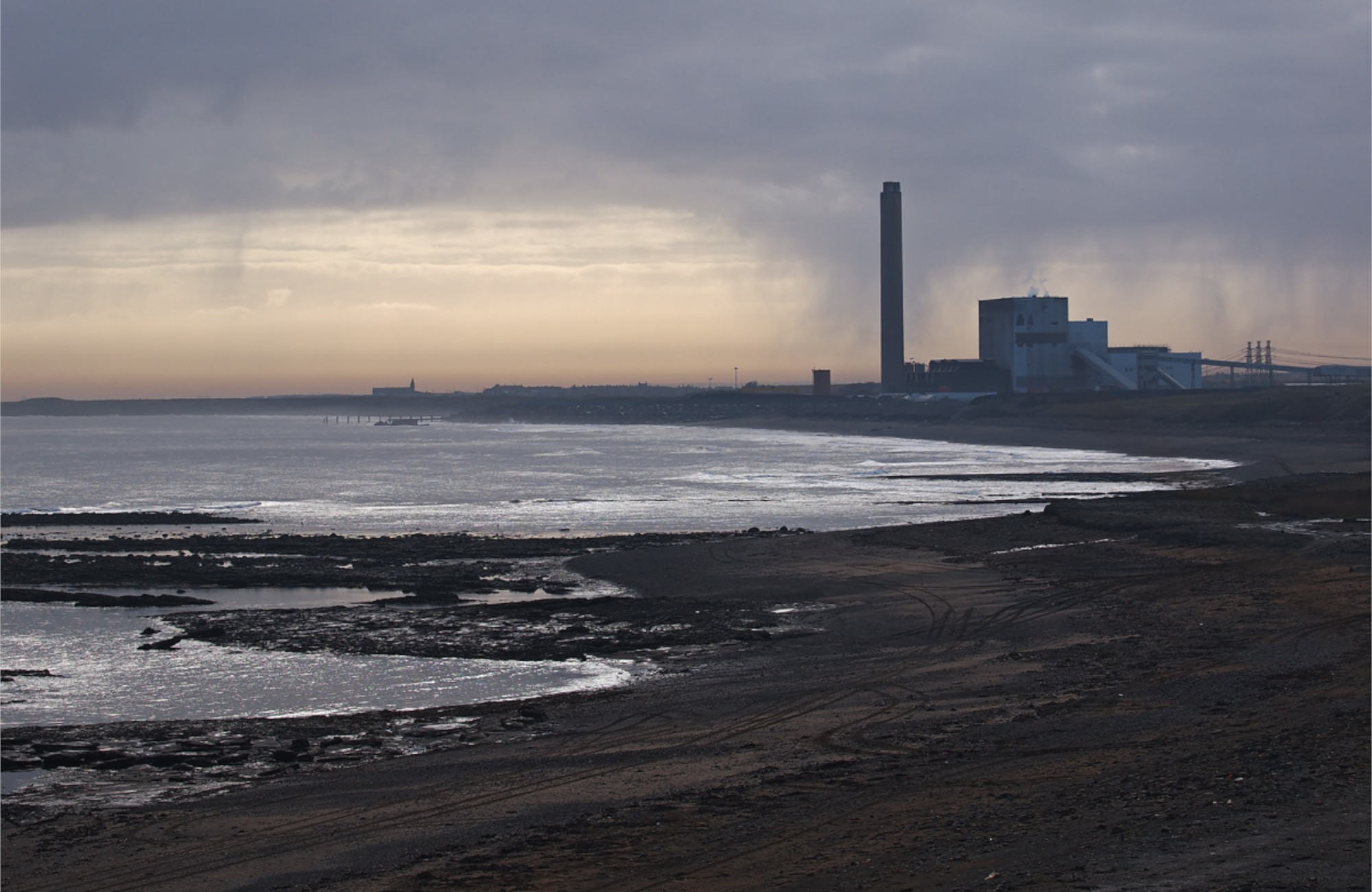
A biomass power plant set to receive over £1 billion in green subsidies told England’s Environment Agency that it would be “difficult and costly to comply” with pollution limits, an investigation by Land and Climate Review has found.
Lynemouth Power Station was granted a permit derogation in 2019, allowing it to exceed standard limits on two toxic pollutants until 2027. Since then, there have been 621 pollution incidents at the Northumberland-based power plant that would have breached regulations under the normal rules.
In that time, Lynemouth received more than £700 million in renewable energy subsidies, funded by a levy on UK electricity bills. On 9th July 2026, the UK Department for Energy Security and Net Zero (DESNZ) signed a new subsidy contract with Lynemouth, worth approximately £1.1 billion, which will apply from 2027-2031.
The Environment Agency is now deciding whether to continue to exempt Lynemouth from standard limits on nitrogen oxides (NOx) and particulate matter (commonly known as dust) until 2035.
NOx and particulate matter can cause serious respiratory health problems, exacerbate heart and lung conditions, increase ground-level ozone, and damage crops.
Lynemouth has solely burned wood since 2018, after it was purchased by Czech gas magnate Daniel Křetínský’s company, EPH. Since 2025, Lynemouth has been owned by TTEP, a joint venture between EPH and fossil fuel supermajor TotalEnergies.
Labour MP Barry Gardiner, who sits on the parliamentary Environmental Audit Committee, said “it is outrageous for TotalEnergies and Daniel Křetínský to claim they cannot afford to install pollution controls while they are set to receive another £275 million a year from billpayers.
“The Environment Agency must not give Lynemouth a blank cheque to pollute – preventing illegal air pollution is not a nice-to-have, it is a human right.”
DESNZ’s decision to sign Lynemouth’s new contract came in the final two weeks of Keir Starmer’s government, and six days before a consultation about Lynemouth’s pollution closed. The agreement was signed despite concerns raised by the UK’s Subsidy Advice Unit about its compliance with the Environmental Principles within the Subsidy Control Act 2022.
The independent advisory body had also called on DESNZ to “consider other sources of public finance” for Lynemouth.
If the Environment Agency denies Lynemouth’s new derogation request, TTEP may have to buy pollution control technologies to stay within emission limits and meet its contractual obligations to generate electricity for the UK grid.
The UK’s largest biomass power plant, Drax, has previously faced lawsuits and regulatory penalties in the US, UK and Canada over wood dust exposure and particulate matter pollution. Drax has not accepted liability for human health impacts, and states there is no evidence of ongoing harms to workers in the UK.
Drax has also faced public scrutiny over claims it has burned wood from precious old-growth forests in Canada. Drax Group has frequently supplied Lynemouth with wood pellet fuel, and in 2024 The Financial Times reported on internal emails from Drax staff which state it is “highly likely” that wood from old-growth forest areas was burned at Lynemouth as well.
“Lynemouth’s impact is often overlooked,” said local campaigner Olwyn Hocking, from Climate Action Newcastle. She said the group “urges far tougher monitoring from now until the contract ends, to protect local people and wildlife, and the planet’s threatened environment, from harms caused by Lynemouth’s supply chains and emissions.”
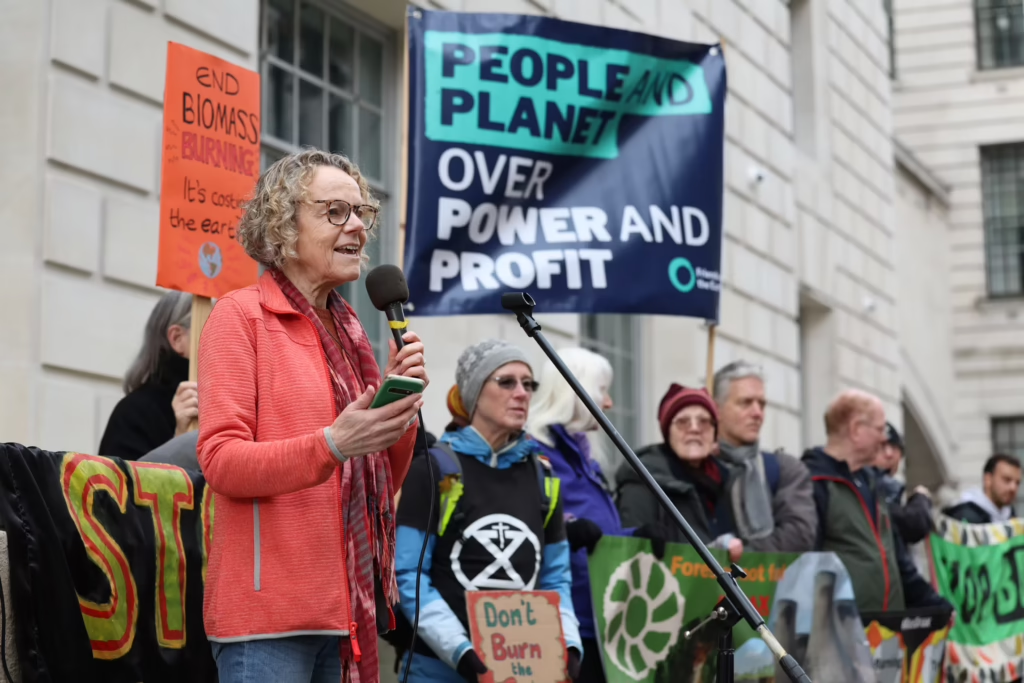
Adrian Ramsay, Green Party MP and Environment Spokesperson, said “the Environment Agency should make Lynemouth pay for proper pollution controls, instead of letting it lag behind standards every other industry has to meet.
“Total and Daniel Křetínský don’t need billpayers to prop up a plant that’s exceeded safe pollution levels for years.”
Biomass burnout
Woodburning is officially considered a renewable and low-carbon power source, but the classification is controversial. The idea is that CO2 emitted by power stations is offset through photosynthesis as trees regrow, but the science on this issue is contested due to the complexity of the systems and time involved, as well as the environmental impacts of logging.
Analysis from Ember shows that Lynemouth’s electricity generation – and therefore its carbon emissions – have risen sharply over the past five years. Each year, the energy think tank publishes a list of the UK’s 25 largest CO2 emitters. Lynemouth did not make the list in 2024, but ranked 12th place in 2025, and jumped to 6th in this year’s analysis.
Ember analyst Josie Murdoch said new generation caps in its next contract mean Lynemouth’s CO2 emissions have likely peaked, “but polluting biomass power will remain far more costly than clean alternatives like wind and solar.” Drax, the UK’s largest biomass power plant, has consistently topped Ember’s emitters list, making it the largest source of CO2 in the country.
The Labour government that came to power in 2024 has acknowledged concerns about the environmental and financial costs of biomass power. In its July statement announcing Lynemouth’s subsidy had been signed, DESNZ also stated “we do not consider subsidised unabated biomass generation to be the long-term solution to the UK’s energy needs…we won’t be extending subsidy to Lynemouth to run unabated after 2031.”
The subsidy operates through the Contract for Difference scheme, which guarantees generators a particular price for electricity irrespective of market rates. Lynemouth’s strike price is twice as high as most solar generators’, and is even higher than Drax’s contract over the same period, despite Lynemouth having weaker pollution controls.
Lynemouth states that the technologies needed to control its NOx and dust pollution would cost almost £20 million, which is less than 2% of the estimated value of its next subsidy. The company argues that the environmental and human health costs of its NOx and dust pollution are not worth this much money, combined with the cost of closing the plant to install new tech.
In 2018 Lynemouth projected the environmental damage costs of its excessive pollution between 2019-2027 as nearly £2.9 million, which would now be nearly £3.9 million, when adjusted for inflation. Given the annual changes in Lynemouth’s generation levels since 2018, this cost estimate may be outdated. Its latest derogation request document did not include an equivalent figure estimating environmental damages between 2027 and 2035.
In this March 2026 document, Lynemouth also cited plans to develop carbon capture, as further reason to waive the usual pollution rules. The document refers to its new contract as “bridging support” until it develops bioenergy with carbon capture and storage (BECCS). Any BECCS would not be operational “until March 2034 at the earliest” and would be “unlikely” without a further government subsidy.
Lynemouth had argued that waiting to install pollution controls until it begins construction on BECCS technology would save on costs and “significant amounts of waste”. Given the government has now stated Lynemouth’s subsidies will end in 2031 – three years before TTEP says it can develop BECCS – this argument may no longer stand up to scrutiny. Subsidy that ends in 2031 cannot act as a bridge until 2034 or later.
There were already significant barriers to achieving BECCS at Lynemouth. Despite the company’s logo appearing on graphics about the carbon capture cluster planned for the east coast of England, it was not included on a 2023 shortlist of projects that could proceed to subsidy negotiations, and is not located near existing plans for CO2 pipelines.
The Czech Sphinx
EPH’s founder Daniel Křetínský, who also owns the UK’s Royal Mail and holds a major stake in West Ham Football Club, is known for capitalising on stranded assets in the energy sector. Nicknamed ‘the Czech sphinx,’ the fossil fuel titan has made billions “betting” that governments across Europe will stall their transition to clean energy, according to experts.
“Křetínský is known to be particularly good at securing public subsidies. In some cases, he is the most efficient at this in all of Europe,” said Veronika Dvorská, Communications Liaison at Re-set, a Czech-based organisation that has researched his business strategies and climate record.
“Křetínský is focused on buying up assets that other companies wanted to get rid of and betting on delaying the energy transition.”
This has not stopped him from securing substantial financial support from states across Europe. The billionaire has collected approximately £2.8 billion in green subsidies in the UK, and over €4 billion from across Europe over the past 10 years, according to a report by Re-set published last year.
Křetínský’s energy empire is now worth over €10 billion, and in the UK, he achieved most of his fortune through capacity market payments, according to Dvorská, which she described as “being used for the stability of the network: payment that’s given to energy companies to run their infrastructure, even at times of the year when it’s not necessarily profitable.”

EPH has hired former politicians as advisors on multiple occasions, which Dvorská described as “part of his business model”. As of last year, this includes former UK Energy Minister Greg Hands, who accepted a new role as strategic advisor to Křetínský. Hands provides counsel on regulatory developments in the UK and Germany that could affect EPH’s investments.
Greg Hands was an advocate of biomass power as Energy Minister, saying in 2021 that it is “key to helping the UK slash carbon emissions and drive down costs for consumers”. He is also chair of GRID UK, which is touted as an “information and event platform” for government officials and investors to “shape the future of UK energy infrastructure”.
Neither the UK government nor TTEP responded to questions or requests for comment by Land and Climate Review.
Bertie Harrison-Broninski is Senior Editor of Land and Climate Review.
Ciara Cassidy is an investigative journalist based in the UK and Assistant Editor at Land and Climate Review.