Click here to read the exclusive in The Times.
The UK government has rejected a bid to select the UK’s largest power station as an AI Growth Zone, Land and Climate Review can disclose, in a blow to Drax Group’s ambitions to develop a 1.2GW hyperscale data centre in North Yorkshire.
The company is relying on a large data centre development to extend the lifespan and profitability of its wood-burning power plant, following increased uncertainty that it will continue to receive its current green subsidies, or further support for carbon capture technology, from 2031 onwards.
The AI Growth Zone scheme was launched in April 2025 to “unlock investment in AI-enabled data centres and support infrastructure by improving access to power and providing planning support.” Five AI Growth Zones have been announced to date, including two in England, two in Wales, and one in Scotland.
The York and North Yorkshire Combined Authority led the application involving Drax, in “close partnership” with the University of York. Announcing the bid in June 2025, York and North Yorkshire Mayor David Skaith stated that “an AI Growth zone in our region will create a pathway to the world’s first carbon-negative data centre,” suggesting an intention to power the facility using bioenergy with carbon capture and storage (BECCS).
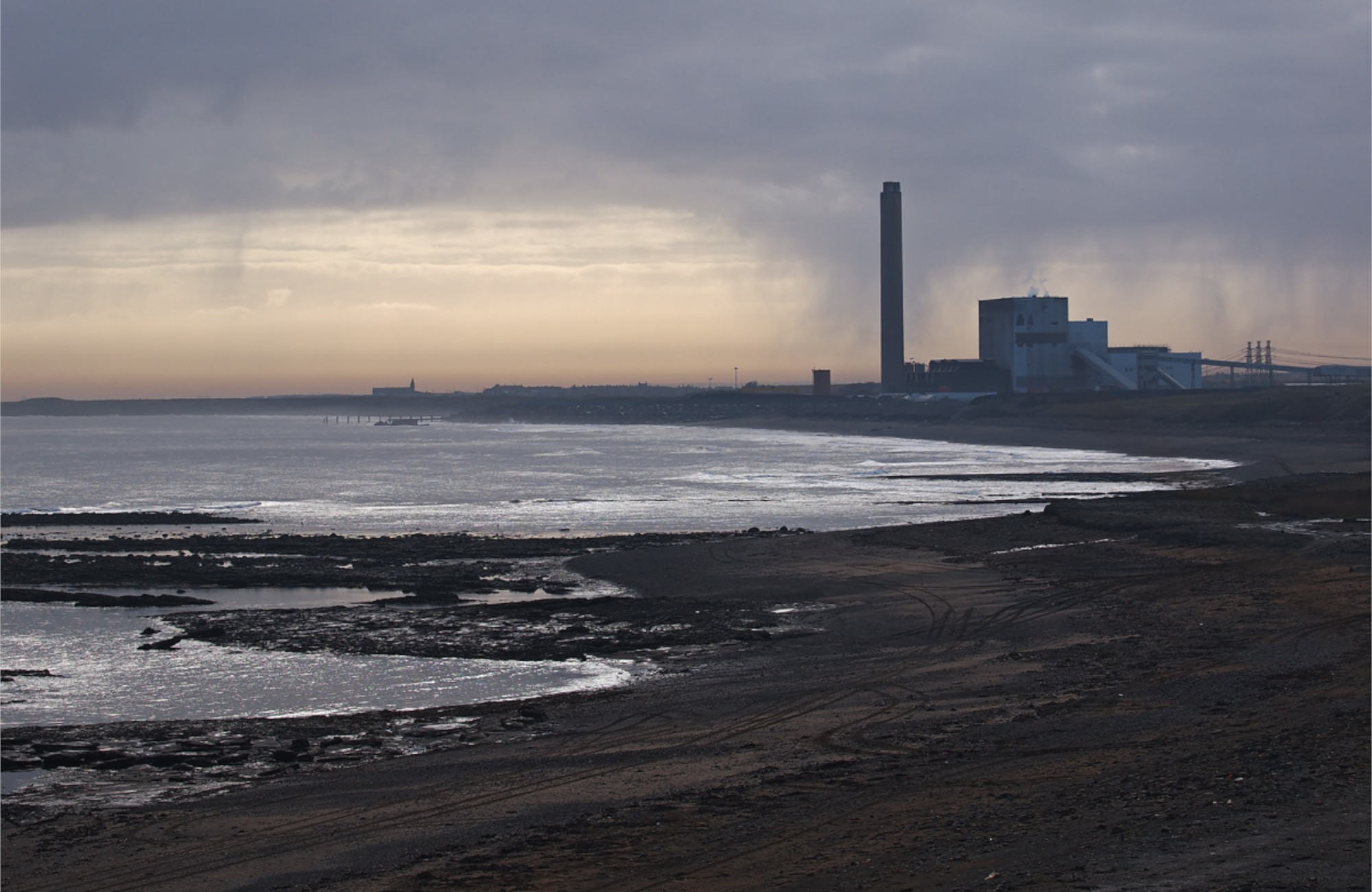
Drax Power Station is the largest source of CO2 emissions in the UK, but because of a carbon accounting loophole, it has been officially classified as carbon neutral since it switched from burning coal to imported wood fuel. If the company installed technology to remove some CO2 from its smokestack, it could claim to be carbon-negative.
News that the bid was no longer progressing was first revealed by University of York’s Pro-Vice-Chancellor Sarah Thompson, in a letter sent to students campaigning against the university’s involvement. The letter from early August stated that “Drax is no longer under consideration as a site for the Growth Zone.”
An undergraduate involved with York Student Action Network, which led the campaign, said there is “a strong anti-AI sentiment among students” at the university, partly due to concerns that it is “taking away entry-level work” and leading to “fewer graduate jobs”.
Fearing that they could be targeted by police, the student asked to remain anonymous. They described policing at a university event about Drax in April as “really shocking; we protest many other things on campus and have rarely if ever had a police presence.”
Merry Dickinson from the Stop Burning Trees Coalition said police have “repeatedly intimidated local people who speak out about Drax.” The activist, who has supported the York students’ efforts, said this included “pre-emptively arresting people for planning to attend a climate camp, and deploying specialist officers and armoured vans from Merseyside to the University of York, and to our homes.”
The student said the university campaign was further rallied by a perception that Drax is not aligned with the university’s sustainability commitments. “The claim that we are a sustainable university is really hypocritical if they are going to develop an AI data centre, especially given Drax says that their wood pellets are renewable, when actually they’re not.”
Multiple journalistic investigations have alleged that Drax has sourced its fuel from environmentally-important forests. In 2024 Drax negotiated a £25 million penalty to the UK energy regulator, Ofgem, after failing to disclose that it had sourced wood from old-growth primary forest in Canada.
News that the AI Growth Zone bid was unsuccessful was confirmed via sources at the York and North Yorkshire Combined Authority. The sources revealed that neither the Combined Authority nor City of York Council remain involved with Drax in developing data centre opportunities, nor is either local authority currently supporting other companies in identifying potential sites for data centres.
North Yorkshire council member Arnold Warneken said “conversations are changing” around data centres within the council, with increasing emphasis given to environmental issues in recent months. “The questions asked at planning meetings are interesting – before, they were just ticking boxes…now, there is definite concern.”
Drax first announced plans to sell power to datacentres in October 2024. In February 2025, the company stated it was “targeting a signed Memorandum of Understanding for commercial discussions and due diligence in 2025.” No such agreement followed, and no tech companies have been publicly identified as potential investors.
In 2025, Drax also signed a new subsidy contract with the UK government, covering the period from 2027-2031. The contract halved Drax’s level of subsidised power generation, and added a clause requiring the company request permission should it wish to supply biomass power to a data centre.
Energy Minister Michael Shanks stated in January that energy department officials would assess this request based on “security of supply, value for money, and sustainability matters.”
In December 2025, Drax successfully applied to North Yorkshire Council for permission to waive requirements for an environmental impact assessment if it were to independently build a smaller data centre. The facility would be 100MW – less than a tenth of the size of the hyperscale project it envisages for the 2030s – and powered directly from the grid, rather than with biomass.
Ketan Joshi, an energy analyst researching the climate impact of AI, said it is a “weird” and “unique example” for a power company to plan to construct a data centre before publicly securing interest from a tech company.
Joshi noted that a utility-scale wind or solar project could be built in five years, and questioned the business sense in Drax waiting until the 2030s to develop its larger facility. He said “there is an awareness that the music will stop at some point soon and [most companies] really want to get concrete in the ground before the level of hype and investment and money floating around starts to fade.”
Chris Hinchliff, MP for North East Hertfordshire, said “Drax spent years defending a subsidy-dependent biomass model with lamentable environmental impacts. Now it’s betting on enormous water and power-hungry AI data centres to keep the show on the road. The company could not be further out of touch with our climate reality.”
The Labour politician sits on the parliamentary Environmental Audit Committee, which has conducted an inquiry this year into sustainability risks from data centres. He said that “the rejection of Drax’s AI Growth Zone bid is a reminder that communities are right to ask tough questions about who benefits from these projects, and whether they’re being driven by genuine public need or corporate self-interest.”
A Drax spokesperson said: “While we were pleased to support York & North Yorkshire’s AI Growth Zone bid, Drax’s plans for a data centre at our site have never relied on the bid’s success.
“Drax Power Station is uniquely positioned to support data centre developers through our site’s existing infrastructure, grid connections, and this is recognised in our new support agreement with the government.
“Drax plans to submit its first phase 100MW front-of-metre data centre to the planning authorities in the coming months and its successful progress could enable a data centre to come online before the end of this decade.”
National government did not respond to specific questions, but a Cabinet Office spokesperson said: “AI Growth Zone proposals must meet published criteria – including credible plans for energy delivery, environmental considerations, and local economic benefit. All bids are assessed on their individual merits.”
Bertie Harrison-Broninski is Senior Editor at Land and Climate Review.