
This article is an edited excerpt from Punyathorn Jeungsmarn’s interview on The Land and Climate Podcast. Listen to the full episode below:
In 2014, there was a massive landfill fire in a province close to Bangkok. It became a big problem, and the government decided to make waste management a national priority. By 2018, Thailand had announced policies to solve the plastic crisis by 2030.
One of the main measures was to promote waste-to-energy plants via subsidies and a rollback of environmental regulations. These facilities can get rid of waste really quickly, while also boosting energy security – but they have not solved the problem.
If you go to that same eastern province near Bangkok today, the landfill is still there. It is now taller than the houses nearby – you can see it from the highway. It is called the Plastic Mountain of Thailand, and beside it sits a waste-to-energy plant.
When I visited a few weeks ago, locals told me that since the plant was built, waste has actually increased. The reason for that is clear: the plant has made waste a resource. To justify the investment in these plants, steady supply of materials is required, along with long term contracts that often last for 10 or 20 years. As a result, the government is now disincentivised from reducing the supply of waste for decades.
Above: The Environmental Justice Foundation’s new film about Thailand’s plastic waste crisis.
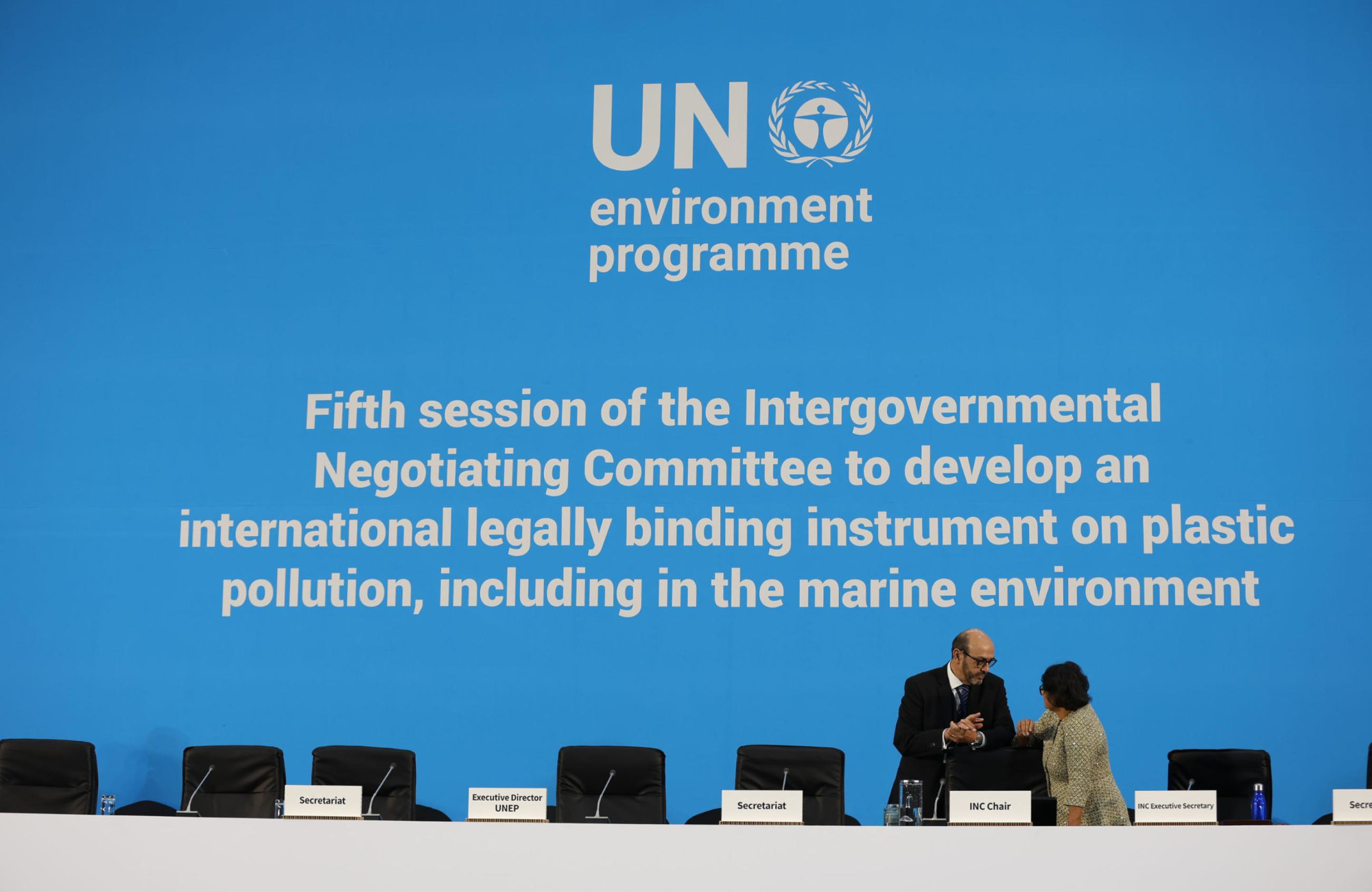
This week, the final session of UN negotiations begins in Geneva to develop an international binding legal instrument on plastic pollution – The Global Plastics Treaty. Ahead of this, Environmental Justice Foundation (EJF) has published a report about false solutions to the plastics crisis, inspired by Thailand’s policies.
One of the treaty’s aims is to create a more circular economy. But what exactly do we mean by this? Take recycling, for example. In the context of plastics, recycling is not recirculating plastic forever, because plastics simply cannot be recycled forever. Recycling can only extend the lifespan of plastic before it finally reaches the landfill.
If you recycle single use plastic into another single use plastic, you’ve only extended its lifespan by a few days. You use a bottle, recycle it, use it again, then throw it away anyway.
While this is going on, you are still producing the same amount of plastic, at a rate that is faster than you can recycle it. Each year, the production rate of plastic increases by 3.5%, while 9% of plastics are recycled. This means that the production rate will soon catch up with recycling, and overtake it.
Current upstream measures – such as bio-based plastics – can also be problematic. If bio-based plastics were produced cleanly, with minimal environmental impacts and to provide the most necessary plastic materials, that would be fine. But this is not the current situation.
Bio-based plastics are being used to create forks, plates and plastic bags that could be replaced with a reuse and refill system. Many are not compostable, and are produced through plantation agriculture and industrial-scale crop-burning. This harms the livelihoods of smallholder farmers, and causes big problems with land-use, water consumption and air pollution. Bio-based plastics also contain toxic chemicals, as additives are required to give plastic its characteristic properties.
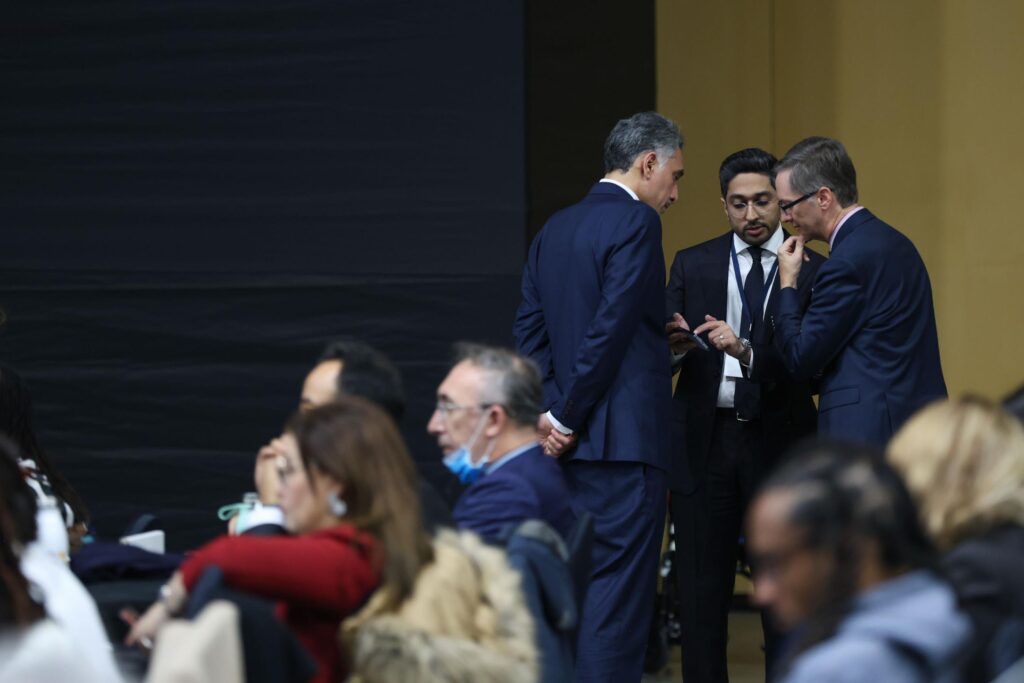
There have already been five rounds of negotiation over the Global Plastics Treaty. Media said the previous session was a failure because we couldn’t achieve a treaty, but we see it in a different light as people who were there. The pressure from bad-faith negotiators was so strong that if we had concluded a treaty in Busan, it would have been a massive compromise. We could see the alignments between certain countries and fossil fuel corporations, and could feel the pressure from lobbyists in those rooms.
Progressive countries want a strong treaty that mandates a reduction in plastics production. Even the idea of this is so allergic to certain negotiators that they have previously threatened to stop negotiating if this phrase is still in there. The term “production reduction” has now been changed to “sustainable production and consumption” to be more malleable, in the draft text. We hope that this article will remain, and that it will be strengthened.
The number of negotiators who want production reduction outnumbers those who want to keep the status quo, but by default, decisions have to be made by consensus. There is a draft rule saying that the text can be agreed with a vote if consensus is not reached, but some negotiators have not agreed to it, believing it will allow the progressive side to win. As a result, for the past five sessions we have been negotiating without an actual rule procedure. No one knows what is going to happen if consensus is not reached.
Whether or not the UN’s treaty can promote production reduction, we have to keep pushing for it at a national level. Only a small minority of countries are plastic producers, but the impacts are polluting our air, our water, and our bodies everywhere. New research continues to find plastics in our blood: even the act of unscrewing a plastic bottle’s lid releases microplastics into the water before you drink it.
Research that EJF released last year found that plastic production in Thailand alone generates 27.3 million tonnes of CO2 equivalent every year – equivalent to the annual carbon emissions of 5.9 million cars. On a global level, if plastic production continues at current rates, this industry alone will exceed our carbon budget by 2050. The single-use plastic we are using in our daily lives could completely annihilate net-zero.
A Global Plastic Treaty that enshrines production reduction as its main goal would significantly help to reduce these problems. My message to the delegations is that this would not mean that you have to cut plastic production the day after you sign the treaty. It takes time. Countries like Thailand are probably not going to have to cut production as much as bigger producers. There will be time to review what amount of plastic is needed, and how long is required to phase out current production.
Saying yes to the article on production reduction will allow negotiation to keep going. If the article is not in the text, we lose any possible opportunity of that happening in the future.
As told to, and with additional editing by, Bertie Harrison-Broninski.
Punyathorn Jeungsmarn is a Plastics Campaign Researcher at the Environmental Justice Foundation (EJF). He has attended previous rounds of the UN talks, and recently worked on EJF’s report False solutions: unmasking policy gaps in addressing plastic pollution in Thailand and Southeast Asia.