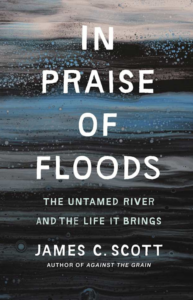
 In Praise of Floods: The Untamed River and the Life It
Brings by James C. Scott, available here from Yale University Press London
- Following the Bend: How to Read
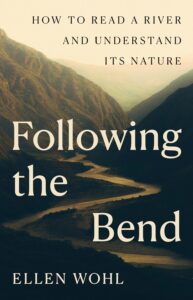 a River and Understand Its Nature by Ellen Wohl, available here from Princeton University Press
Rivers – or river thought – have been experiencing something of a renaissance in recent years. Books like Robert Macfarlane’s Is a River Alive? and Monica Feria-Tinta’s A Barrister for the Earth have questioned our relationship with and treatment of what each considers our hydrological kin, while the rights of rivers movement has spread globally. Entering public consciousness through the battle to secure legal personhood for the Whanganui River via a system of Māori guardianship in New Zealand in 2017, equivalent local efforts have been taking off around the world – whether in India, Bangladesh, or Britain.
It is high time, then, for the horizons of river thought to be expanded. The late James Scott’s In Praise of Floods and Ellen Wohl’s Following the Bend are worthy additions to the shelf. Both compellingly grapple with the terrifying sense of temporal and spatial impotence we implicitly embody today – despite our short planetary presence reigning terror over our riverine kin and all those who rely thereon. Both, too, grapple with concepts of spatiotemporal (im)permanence – the slippery ever-moving quality of rivers and waterways. While Scott characteristically and ruthlessly dissects the political economy of his subject at hand – focusing on the Ayeyarwady River in present-day Myanmar – Wohl’s Following the Bend is a discursive, accessible, textbook for those wanting to wrap their heads around the hydrology, geology, and ecology of those we subject to our whims.
Read our previous reporting on the Whanganui case:
- Should rivers have rights? by Abbie Parker, 2022
- A longstanding battle: Māori efforts to protect the Whanganui River by Dana Zartner, Fabian Cardenas and Mohammed Golam Sarwar, 2025
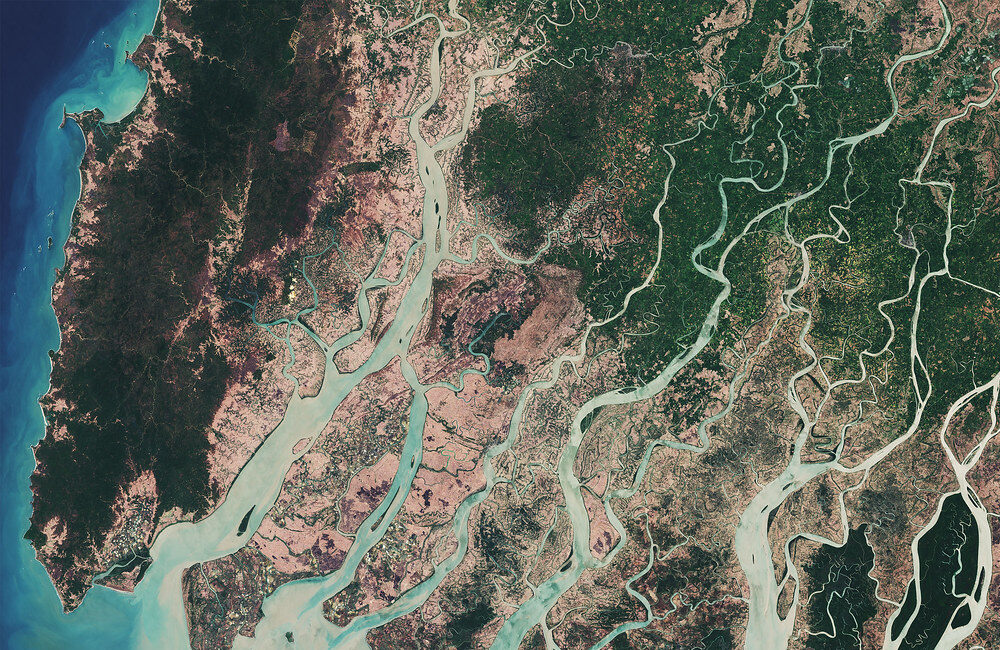
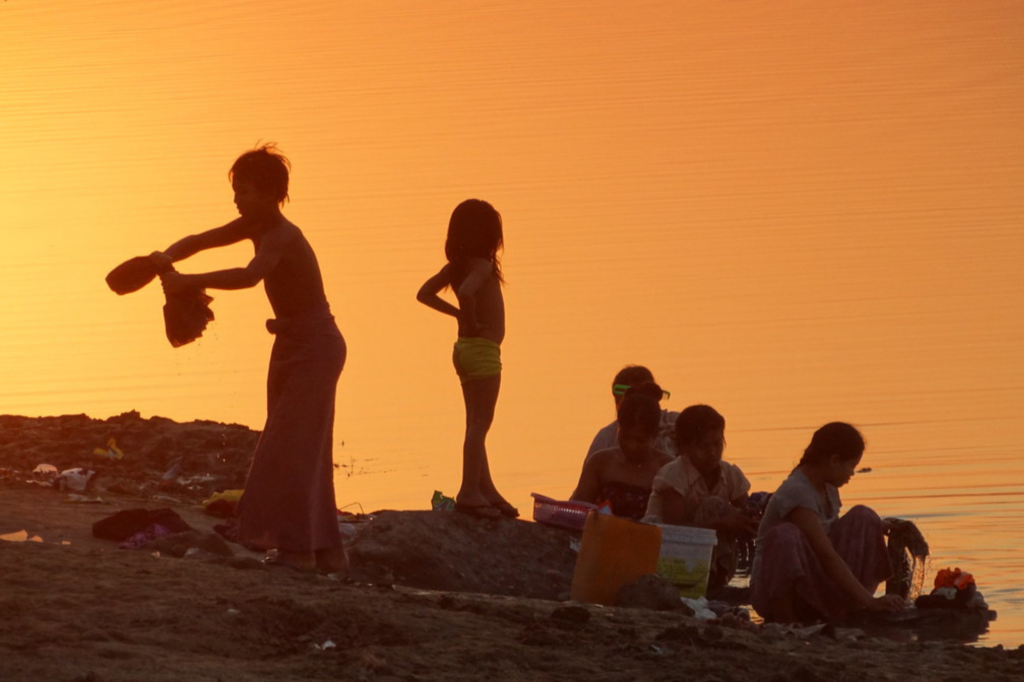
In Praise of Floods, its research and writing interrupted by a renewed crackdown by Myanmar’s military regime, was part-written by Burmese colleagues and collaborators of Scott’s — who carried out the extensive ethnographic fieldwork that underpins much of the book. Yet Scott’s unflinching analytic-polemical style is present throughout. Framing the book as an eco-biography, as a biography of the Ayeyarwady’s spatial inclinations, varied interactions with its human and non-human inhabitants and dependents, and now its slow death, Scott intended for himself and us to think in ‘river time’. This involves accepting the false sense of spatial constancy rivers hold in our imaginations; our complex and now reduced relationship with flooding; and the profound ways we have manipulated their flows and paths in what he terms the ‘thick Anthropocene’ — relative to its ‘thin’ (pre-1700) agriculture-centric cousin.
At the same time, it involves accepting the long legacy of our destructive relations with the rivers we rely upon and call home. The advent of fixed-field agriculture, in Scott’s view, presaged the present day. The millennia-long clearing of forests and subsequent disruption of hydrology and silt flows, alongside the redirection of water to irrigate cropland, represent an “embryo” of humankind’s impacts on “the riverine landscape and watersheds” today. In this, he draws on the work of numerous scholars, including Mark Elvin’s studies of the Yellow River and the political economy of its flow. In his discussion of flood pulses — seasonal behaviour in which rivers fill their floodplains, triggering complex biotic exchanges — Scott displays his characteristic tendency of making that which he is discussing seem like the centre, or rather the explanation, of everything, expressed most famously in his 1998 book Seeing Like a State.
Scott’s Burmese colleagues, meanwhile, focus on ethnographic descriptions of the human relationships with the Ayeyarwady River. Nats, a form of spirit unique to Burma who, while once human, “became revered spirits” after their deaths due to “their life experiences and the locales where they lived”, are foregrounded; as are stories of changing fishing, mining, and agricultural practices that have drastically altered the river’s fortunes over the past five decades. Scott even writes an entire chapter from the perspective of non-human co-inhabitants of the Ayeyarwady. In this, he succeeds, magnificently. It frees him to make compelling and from-those-perspectives self-evident arguments. The words of the Ayeyarwady river dolphin, speaking on behalf of all those who spoke — whether snow carp, white ginger (a type of lily), oriental darters (cormorant-like tropical water birds), or the Burmese roofed turtle — are worth quoting in full:
We nonhumans who have spoken demand our full rights as citizens of the watershed. We recognise that you too are riverine citizens; you desire clean water and a reliable and abundant harvest of fish as part of your subsistence. But both are in jeopardy because of what you and others of your species have been doing. What we have here is a world-historic land and water grab in which a single species has seized an entire landscape from its indigenous inhabitants and unilaterally colonised it. We are abject colonial subjects just like indigenous peoples whose land was appropriated by imperial expansion. We are, in much the same way, the subjects of a quasi-universal settler colonialism. As comparative newcomers in evolutionary terms, you declared the territory aqua nullius and terra nullius — water and land belonging to no one and therefore open to your claim of exclusive sovereignty over all forms of life.
In Praise of Floods is, in fact, just that — a praise of the ecological-hydrological wonders that floods bring; that rivers bring; of all that rivers embody. It is an explicitly (eco-)political work. Scott summarily diagnoses humanity’s ills as iatrogenic — a medical term describing an illness “caused by previous treatment” or by an illness contracted while receiving treatment for a previous illness, like an infection caught while in hospital. Scott reminds us that roughly 70% of hospitalisations in the United States “are the direct or indirect result of prior treatment” — that treatment typically being chemotherapy, radiation therapy, or surgery. He then compares this with the ways we have managed (and continue to manage) and relate to rivers:
In the attempt to prevent virtually all floods, weirs, levees, and dikes are erected to confine the river to its channel. Depending on the extent of prior deforestation, erosion, and drainage, sediment is likely to accumulate on the riverbed, often raising its level above that of the surrounding floodplain. These barriers do indeed make floods less frequent by providing more space for the river to swell at high water before it overtops the levees and dikes. When, however, levees and dikes fail, the flow they unleash is likely to be far more destructive. The aim of preventing all floods comes at the cost of laying the groundwork for more catastrophic floods.
And this, Scott asserts, is the result of a “political lock-in” — the “imperative of holding productive [pre-existing] populations in place and defending them against floods” that only exist due to prior “flood” management. His solution to this lock-in, and to our broader ecological calamity, is “soft-path responses” — a form of intellectual modesty that, rather than bulldozing and concreting through ecological-hydrological realities, entails working around them.
This is an understandably soft solution to an impenetrably hard problem. One can hardly, or fairly, expect a single answer to our calamity. Despite this, Scott is clear that the status quo is indisputably bankrupt: early state formation, to him, with the concentrated sedentary agricultural activities it entailed, is inextricably linked with the subsequent never-ending hard management of the natural world and its waterways; with its endless focus on the optimisation, and subsequent simplification, of the natural world, of our food systems, livestock, arable crops, and horticulture. Agriculture, and Scott here quotes Timothy Weiskel, “depends on ecocide”. And that ecocide is a forebear of our now capitalist craze to limitlessly and unilaterally extract value from our natural systems.
While this is a slight simplification of his argument (Scott does not directly link early state formation with today’s capitalist exploits) the emphasis on sedentarist agriculture being a prerequisite of such exploitation is false. Sedentary, nomadic, or otherwise, human communities have for millennia degraded or lived in supposed harmony with the natural world to a diversity of extents. Claiming otherwise feels like a forced — albeit intuitively attractive — transplantation of his arguments from Seeing Like a State. The concurrent claim that “[w]hereas the hunter-gatherer adapts to the complex rhythms of the natural world to subsist, the early state strives to subdue this movement and complexity — to create a state-serving habitat” is simply wrong. States are hardly exclusive to sedentarism. Scott could have cited the recent work of David Wengrow and David Graeber, for one, or referenced literature from my own academic specialism — the ecological-exploitation-fuelled, far-from-sedentarist early modern Native American Great Plains.
That aside, the book is a historically astute and rhetorically sound Praise. As is Ellen Wohl’s Following the Bend, the diagnoses (and prescriptions) of which are, in the words of Scott, “softer”. Describing the devastation Scott outlines with colour, Wohl dryly, characteristically — and, it should be said, aptly — begins the book by stating that “human legacies are difficult to escape” when studying and reading rivers and the landscapes around them. Following the Bend follows the length, breadth, and height of rivers, surveying their multifarious sources — whether monsoon- or groundwater-fed — their multifarious shapes and sizes, and their multifarious functionings. Importantly, Wohl’s narrative emphasises ecology’s, hydrology’s, and geology’s spatiotemporal pre-eminence. It emphasises the intrinsic lack of spatial permanence that the interplay between those three, and particularly the interplay between the latter two, entails — and the ever-changing boundaries that result. And it emphasises the dichotomy between our subordination to this pre-eminence and our relatively recent escape.
Following the Bend, more than anything, simultaneously charts the process of knowledge discovery — of our collective learning of how rivers form, function, and die — and the innumerable uncertainties, or knowledge gaps, that remain. This takes place across fourteen chapters, covering basic hydrological concepts like Hadley circulation — the global circulation of air and thereby moisture between the tropics and the poles — alongside the industrial, chemical, and transport-fuelled contamination of waterways over the past three centuries. Coming across some of these concepts for the first time and, in some instances, being reminded of them brought me back to school science lessons, saddened that I had ever forgotten and chosen not to actively pursue theories that underpin our understanding of how the physical world operates.
This feeling was present throughout the book. Wohl’s discussion of stomata (the breathing elements of photosynthesising flora) and how their response to nightfall increases river flows due to decreased uptake of groundwater was fascinating; as was how the use of isotropic composition — essentially individual water isotopes’ weight — can track water flows across continents, whether transported by rivers, snow, or rain. Her discussion, too, of the minutiae of river ecosystems is entrancing: few will have likely heard of larval aquatic insects that spin spiderweb-like nets to filter food, inhabiting the space just above a river’s biofilm.
Wohl’s grasp of the historical record only adds to this. The Euroamerican settlement of North America, referred to as the ‘Great Drying’, is examined — whether that be the draining of wetlands, the redirection and straightening of rivers and waterways, the construction of canals, or the systematic abstraction of river-water and groundwater for agriculture. Linking it to the present-day extermination of the Colorado River, now no longer flowing into the Gulf of California, Wohl reflects on the endangered statuses of landforms — the idea that specific geologies are in danger of extinction due to indirect human influences, like water abstraction and rising sea levels. Linking this to the recent downgrading of wetland protections by the US Supreme Court, Wohl highlights the gulf — or canyon — between arcane legal language, the imperative to protect rivers and waterways, and the out-of-date rules protecting against over-abstraction. Water quotas for the Colorado River, for example, are based on old averages and projections of water flow, by-default resulting in overuse. Another is the (in)ability of existing legal frameworks to respond to the sheer scale of toxic mining-related pollution — with just shy of 500,000km of river channels affected worldwide.
Interspersed with stories of her fieldwork, Following the Bend is a testament to Wohl’s depth of knowledge and public communication thereof. She, on numerous occasions, makes clear what she wants her readers to take away from her writings: first, that the study of rivers is ultimately the study of energy — how rivers move, shape, and are shaped by landscapes and their inhabitants over time; second, that resilience matters, and that through our simplification of hydrology rivers’ resilience has suffered — and made us more vulnerable to both water shortages and floods; and third, that our perception of rivers and waterways — what they should look like and how they should function — is blinkered. That blinkering is based on a mix of false aesthetic conceptions of tidiness, like those popularised by eighteenth-century English landscape architect Lancelot Brown, and the indirect effects of exterminating up to 400 million river-engineering beavers in the United States in the eighteenth and nineteenth centuries.
Wohl does attempt to provide an antidote to the problems she highlights. The need for river restoration, for one, is discussed in places, including in the context of logjams’ use in the UK and the Room for the River programme in the Netherlands for flood mitigation. Wohl also discusses less direct interventions, drawing inspiration from the rights of nature movement’s successes in New Zealand and Ecuador. But this discussion is less plentiful than expected, nor does it contain the same level of zeal that Scott exhibits in his critiques of dominant sociopolitical paradigms. When surveying the effects of industrial and agricultural contamination of rivers, for example, Wohl somewhat fatalistically concludes that “pollution, it seems, … will always [be] … with us”. Perhaps it’s unfair to expect Scott-like zeal, though, given the different purpose of Wohl’s book. Yet Wohl’s concluding remarks — encouraging what she calls a river ethic, being the emphasis of preserving “the integrity of a river ecosystem” rather than its isolated elements — are as soft as Scott’s.
Both authors’ conclusions, resting on similar diagnoses of pervasive human influences, feel somewhat unsatisfactory — disproportionally modest given the scale of the challenge at hand. In the case of Scott, specifically, his rhetorical ambition is not met by the corresponding empiricism as in his previous books. Given, though, that In Praise of Floods is his last book, and given my own ideological inclinations, I cannot help but align myself with his conclusions — aided in understanding by Following the Bend. Both, then, are worthy and pertinent reads.
Ted Theisinger is the creator and author of Diagnoses, a blog working at the intersections between ecology, sociology, economics and finance, read it here.