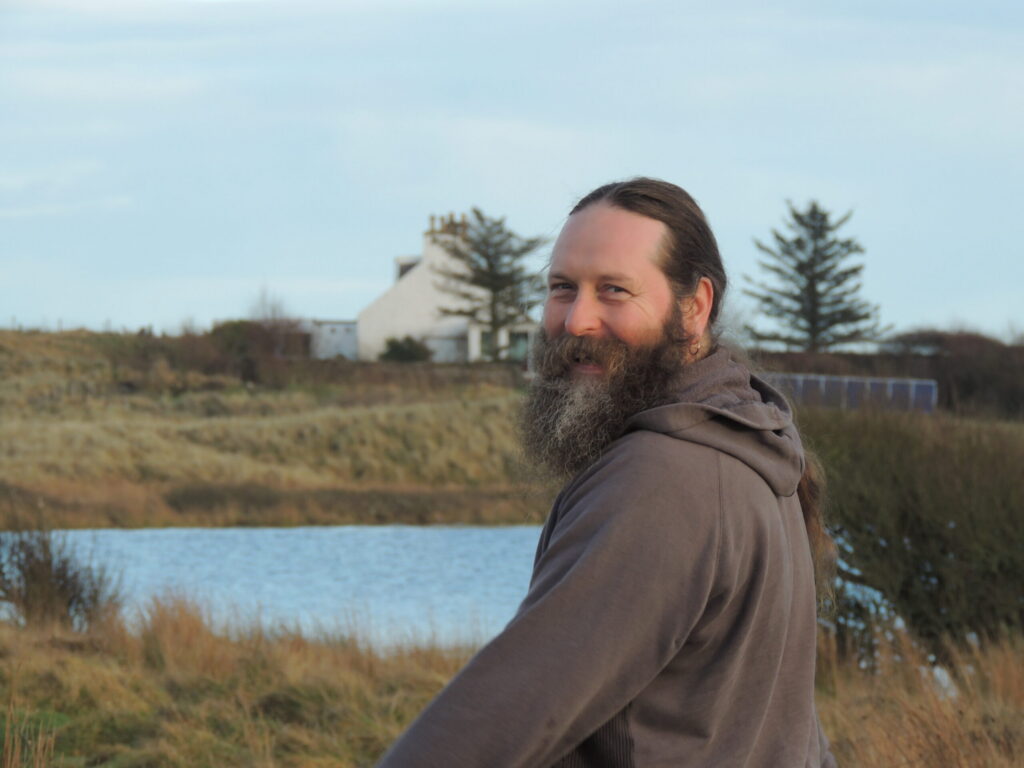
Land and Climate Review co-editor Edward Robinson sat down with Professor Pete Smith, one of the UK’s most prominent climate and environmental scientists, to talk about his new research project. Smith has been an IPCC and IPBES lead author several times and a Royal Society-Wolfson Research Merit Award holder (2008-2013). He is currently Professor of Soils & Global Change at the University of Aberdeen and editor of the journals Global Change Biology and Global Change Biology Bioenergy.
What is climate adaptation and why does it matter?
Climate adaptation means recognising that climate change is happening and taking the action to deal with it. Unlike mitigation, which tackles the causes of climate change, adaptation prepares us for its impacts and improves our resilience.
Tell us about the Maximising Adaptation to Climate Change Hub (MACC Hub) funded by the UK government, and the project you’re leading within it.
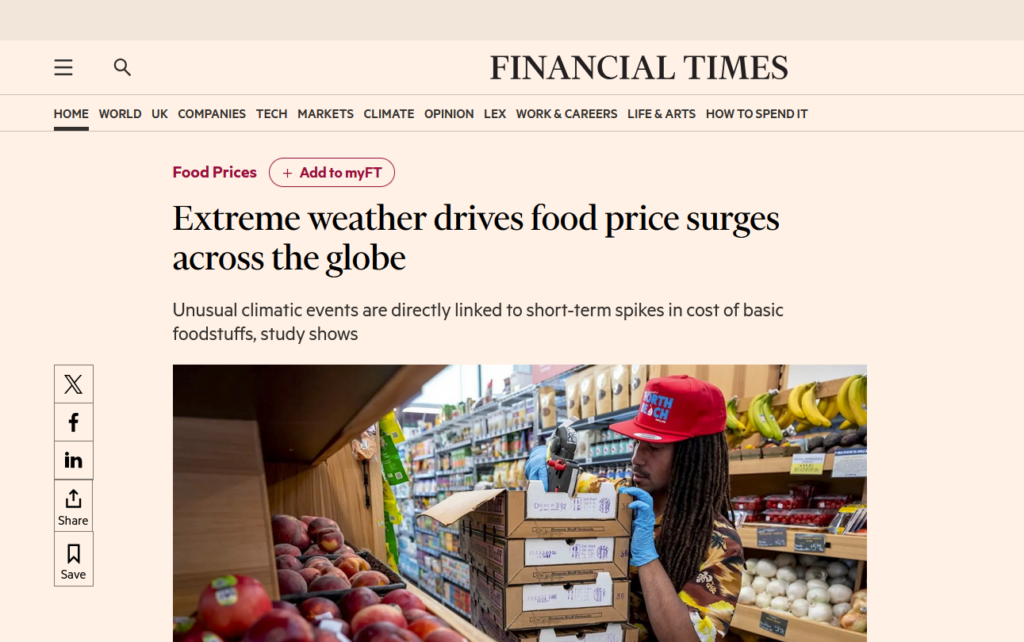
My project examines ‘climateflation’ – how extreme weather events disrupt harvests and supply chains and drive up food prices. A recent example of this in the UK was olive oil, whose prices spiked in 2024 because of the heat wave and the drought in the Mediterranean, which damaged the olive harvest. We saw it as well in Easter 2024: the price of Easter eggs was higher because the cocoa harvest had been damaged by climate impacts.
The UK imports over 40% of its food. Climate’s influence on our supply chain can cause inflation and affect the nutrition of produce. That, of course, has dietary impacts.
The project tracks how climate-driven price increases affect what people buy, particularly vulnerable households who don’t have the ability to go out and buy extra virgin olive oil, for example. When prices rise, people swap in cheaper alternatives, and these often have lower nutritional value. So, the families already eating the poorest diets are hit hardest. That’s what we’re looking at.
Is this connected to the Barcelona Supercomputing Centre study which linked food price spikes to political instability?
Yes. They’re part of our research team. Food price spikes have been implicated in periods of civil unrest. The Arab Spring, back in 2010-11, for example, was partly driven by rising food prices, which intensified social dissatisfaction and contributed to widespread protest. Climateflation can have serious geopolitical consequences. And if there’s no emissions mitigation, things are going to get worse – so we should prepare and adapt for the worst.
There was a study published by Nigel Arnell’s group at the University of Reading, which looked at how to prepare for precisely this: for a 4°C temperature rise and the impacts this would have on infrastructure and the food system. Our project looks back to the past for its information on the climate extremes, predicting that by 2030, regional droughts currently occurring once-in-every-five-years could be happening every other year. We then forecast what the impacts might be on the UK food supply chain and then how to adapt to that.
That’s what the UK’s Department for Environment, Food & Rural Affairs
is asking the project to do: use the statistical relationships in the past, use the climate expected in the future, to examine the increase in the incidence of these extreme events.
In terms of adaptation, the UK feels like it’s already in a difficult situation. The Food Foundation, for example, has shown it costs roughly double to buy healthy food in the UK.
Exactly. So the question is, what can we do? The adaptation component is what governments can do about it: for example, free school meals and breakfast clubs would protect vulnerable populations. That’s building resilience – ensuring children in vulnerable situations get basic nutritional requirements even when climate shocks hit food prices.
What about specific commodities like wheat and fresh produce?
Wheat is a globally traded commodity so it’s more resilient. If we don’t buy it from one place, we can buy from elsewhere. For example, before the Russian invasion, Ukraine was the largest supplier of wheat to the UK. But after the supply chain was wrecked, we’re buying from elsewhere.
Fresh fruit and vegetables are the real concern. We don’t eat enough in the UK, and vulnerable populations already don’t have the capacity to get their five-a-day. As climate impacts increase, our project looks at how this will affect the nutritional quality of the typical food basket, particularly with fruit and veg, which are already expensive and underpurchased by the most vulnerable in society.
Should we be growing more food domestically? Tim Lang and others have argued that while cheap imported food underpinned modernity in places like Britain, we didn’t invest in our agricultural base.
We definitely should grow more in the UK; more of the things we can. While we import out-of-season produce (beans from Kenya in December, tomatoes in the middle of winter) and we’re never going to be able to grow everything we want here because people will still want avocados and bananas; if it was economic to only eat our own seasonal produce, if farmers were making loads more money doing that, they’d be doing it. Farmers must be paid a fair price for their produce to allow them to do that. There has to be a rebalancing of the situation.
Shorter supply chains mean fewer failure points. It’s not just ‘climateflation’; what happens if the Suez or Panama Canal gets blocked – or (now) the straights of Hormuz which is pushing up global fertiliser prices? Other shocks can hit our supply chains too but shortening chains isn’t without risk. Last year’s wet spring and dry summer affected UK barley quality. If we put all our eggs in one basket, domestic climate extremes become critical vulnerabilities. You need a diverse portfolio – more domestic production but maintained international supply chains too. This raises the land use question: 70-80% of our land produces animal protein through feed crops or grazing. Could some be repurposed for fruit and vegetables?
When you put a calorie through an animal, they’re about 10% efficient at converting that calorie into something we can use. The food goes through a 10% efficiency bottle neck – we lose 90% of that. It’s much better from an efficiency point of view of directly consuming the vegetable products, the plant-based foods, rather than forcing them through animals and consuming them.
And from a land use aspect, there’s much less pressure needed on the land, right?
10 to 100 times less land is used per kilogram of product when eating plant-based products versus animal products. And plant-based products have lower climate impacts, lower energy demand and lower water footprints. It’s been politicised, labelled as part of the culture wars, but it shouldn’t be part of the culture wars. This is about making us healthier. We currently overconsume animal products, which are making us unfit and unhealthy. So, if we can consume less and eat more fruit and veg, it would make us healthier, as well as reducing pressure on land and making the climate change issue and the biodiversity issue much less damaging.
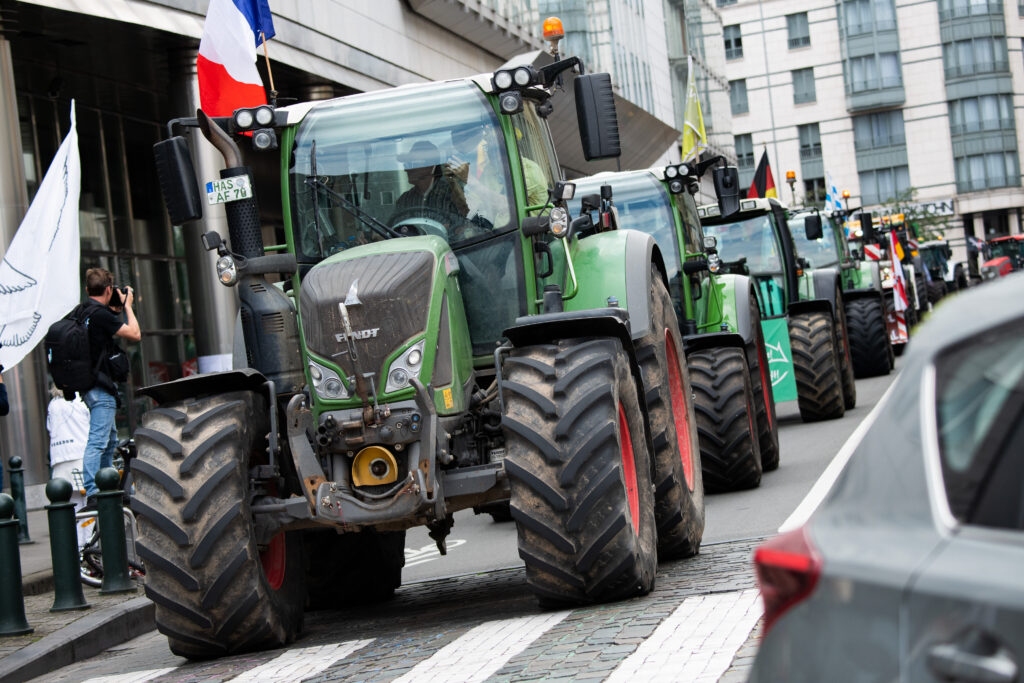
We’ve had farmers’ protests in Britain, Brussels, France and the Netherlands. It doesn’t feel like all farmers, as varied as they are, are always friends of the climate movement. Do you see a way forward?
I hope the evidence will come out. Climate change action used to have cross-party support – the Climate Change Act passed with consensus, for example. But that’s broken down, with some parties pushing back on commitments or even denying that climate change exists. It’s become politicised like in the US, which is a shame. Evidence is evidence – it’s not left wing or right wing. We wouldn’t ignore evidence-based medicine, so why ignore evidence-based food policy?
We shouldn’t demonise farmers. They’re trying to make a living, squeezed by supermarkets, ultimately squeezed by us demanding cheap food. In the 1970s and ’80s, we paid a much larger proportion of our income on food. Now it’s smaller because we want to spend on other things. But farmers still need fair payment.
The trouble is, optimising at that global level, we save the health service billions of pounds in the future. But we’ve got a problem now. We’ve got a cost-of-living crisis now. So that’s one argument against doing anything. The other one is that different government departments have different budgets. Saving money in the health sector is not the concern of the minister who’s looking after agriculture, right?
We should have a better way of joining up that sort of thinking: nexus thinking, they call it. It’s a bit of a jargon word but it means thinking outside of the boundaries of a single problem and using joined-up thinking about how we can make life better across the board, rather than thinking in our individual departments or disciplinary boundaries. Hopely our work will serve to highlight this.
Do you see a way to do both? To do adaptation and mitigation with regard to agriculture on land?
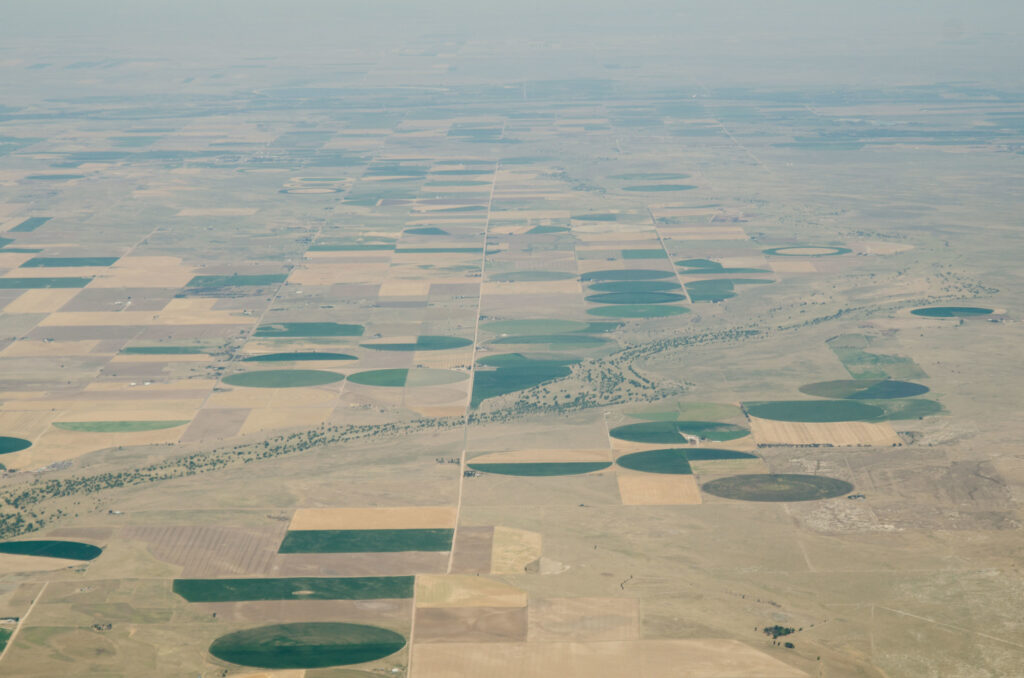
Yeah, totally. Lots of the mitigation measures are also really good for adaptation. Take soil erosion, for example. Taking a little bit of your unproductive land and putting it into trees or permanent grasslands will protect your soil from downstream erosion. Putting in those little riparian zones, those little buffer zones, putting in hedgerows, all these things are good for mitigation. It creates a carbon sink, but it’s also good for adaptation. So it improves the resilience of the system, protecting it from soil erosion, improves water infiltration so you don’t get runoff.
Many of these options are actually so-called nature-based carbon removal solutions, which are good for mitigation and adaptation. They don’t have to compromise the productivity or profitability of the farm. They can be done in a way that is profitable. But it means that we have to get our subsidy system right in the UK and Europe. We left the EU, which means that we’re re-writing how we subsidise farmers. We’ve got a great opportunity now to subsidise farmers in a way that produces those public benefits, those public goods, as well as ensuring their own profitability. That’s what we should be doing.
I should say, in fairness, a lot of the schemes that have been developed in all of the individual countries of the UK are attempting to do that, to align it better, to allow farm profitability, but also to make space for nature and to create nature-based solutions, which could be good for mitigation and adaptation.
What about soil health for adaptation?
If you increase the soil organic matter, it makes the soil healthier; that’s the headline indicator of soil health. It also improves the water-holding capacity. It means you’ve got more nutrient flows, nutrient cycling, which means that you need less fertiliser because a lot of it is being done by the biology and the nutrients in the soil. You’re also drawing down carbon because soil organic matter is over 50% carbon, but as you build up the organic matter, you’re retaining that carbon in the soil rather than letting it go as CO2 into the atmosphere. So, again, it’s a mitigation option and an adaptation option.
I think it’s been oversold a bit, particularly with the carbon markets promising farmers that they’re going to get big returns by increasing their soil carbon, some of which is not really possible to do, especially if you’ve got high-carbon soils already. But there are so many reasons for doing it for adaptation and for mitigation and for a whole bunch of other ecosystem services as well.
Ok, but how do we balance all these demands on land: crop yields, secure and diverse supply chains, soil resilience, even sustainable aviation fuel?
Land can’t do it all. We can’t rely on land to solve problems in other sectors. For sustainable aviation fuel, for example, if we can use byproducts like cereal straw, fine; you’re producing food and fuel from the same area. But putting aside vast tracts just for aviation fuel would be damaging and create land competition. Many farming practices deliver multiple benefits: better climate adaptation and improved productivity. Regenerative agriculture means different things to different people, but fundamentally: keep soil covered with crops, not fallow, replenish what you take out. Industrial agriculture treated soil as an inert substrate for chemicals, but if we look after soil, it does the work for us and reduces external inputs. Fertiliser is expensive and now getting more so, with the conflict in Iran and the Persian Gulf. Getting soil to work with nature saves money.
When people say “we can’t have it all,” they’re assuming the status quo works. But it feels like we’re already out of the old world.
Exactly. We’re not protecting some perfect system. Our current system isn’t performing optimally. Our food system produces poor health and environmental degradation. If we take a broader look, there are better ways to farm. It’s not one-size-fits-all, but different systems in different contexts can deliver climate adaptation and farm–profitability together.
Is there “low-hanging fruit”?
Any low-hanging fruit we’ve already probably harvested. But the politically difficult question is the one we keep avoiding: do we produce and consume too much livestock? The evidence says yes. For health, land efficiency, and climate resilience.
I know it’s contentious, but we need to have honest, evidence-based discussions about building a food system that keeps people healthy and well-fed through the climate disruption that is already here and looks very likely to get worse.
Further reading:
- Maximising UK Adaptation to Climate Change hub, (MACC) Hub
- New funding to explore how the UK adapts to climate-induced food price shocks, 2025 University of Aberdeen
- Fertiliser disruption from Iran conflict prompts global food shortage warnings, Susannah Savage, 2026, FT
- Extreme weather drives food price surge across the globe, Susannah Savage and Alan Smith, 2025, FT
- Climate extremes, food price spikes, and their wider societal risks, Maximilian Kotz et al 2025 Environ. Res. Lett. 20 081001
- Arnell, N. W., Hawkins, E., Shepherd, T. G., Haigh, I. D., Harvey, B. J., Wilcox, L. J., Shaffrey, L. C., & Turner, A. G. (2025). High-Impact Low-Likelihood Climate Scenarios for Risk Assessment in the UK. Earth’s Future, 13(12), e2025EF006946. https://doi.org/10.1029/2025EF006946