 This article is an edited excerpt from Gökçe Günel’s new book ‘Floating Power: Energy, Infrastructure, and South-South Relations’, published in April 2026. Copyright Duke University Press, 2026.
- Buy here from Duke University Press.
Listen to Gökçe discuss her previous book, Spaceship in the Desert: Energy, Climate Change, and Urban Design in Abu Dhabi, with Bertie Harrison Broninski on the Land and Climate Podcast here:
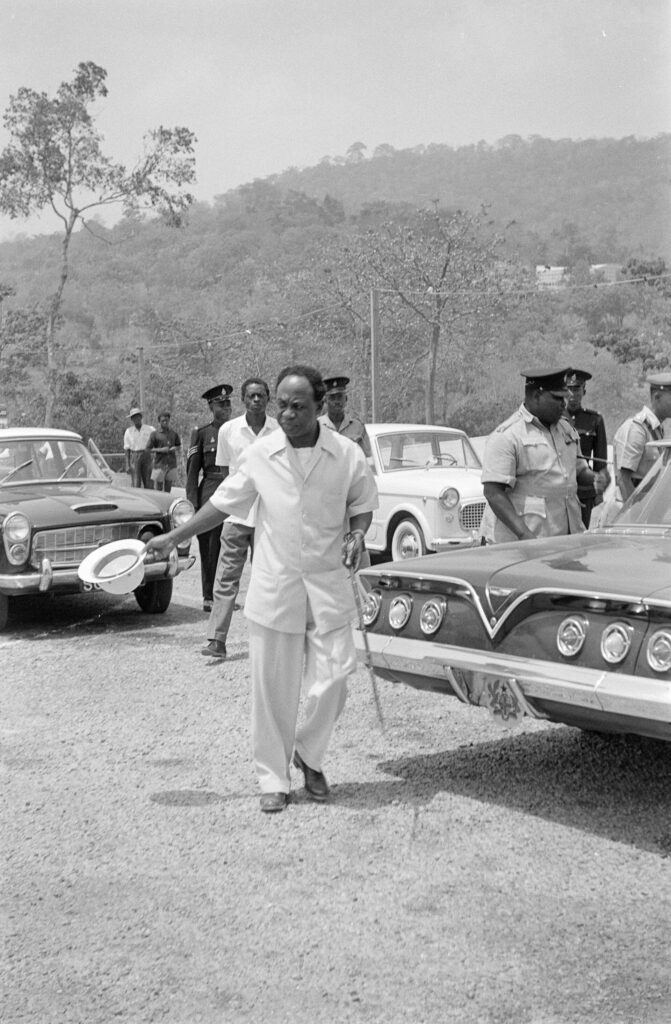
When Ghana’s first president Kwame Nkrumah announced the opening of the Volta River Project in 1966, he did so in a “spirit of fruitful collaboration for a better world”. Lake Volta and Akosombo Dam became the world’s largest human-made lake by surface area and the fourth largest reservoir by volume, and made electricity production a symbol of independence, in opposition to the British colonialism that ended eight years earlier.
“Let us dedicate it to Africa’s progress and prosperity,” the pan-African statesman continued at the project’s inauguration. “Only in this way will Africa play its full part in the achievement of world peace and for the advancement of the happiness of mankind”. A few months later, Nkrumah was overthrown by a military coup.
“The future envisioned by Nkrumah, in which each would give according to his ability and receive according to his needs,” as the literary scholar and cultural historian Saidiya Hartman observed, “had been eclipsed.”
Until 1997, state-owned hydroelectric power plants produced all of Ghana’s electricity. In the early 2000s, however, when power demand was increasing across the country, the dams could no longer satisfy national electricity needs.
Most of the new power producers that started operating in Ghana in the early 2000s were thermal stations that rely on natural gas, stockpile light crude oil, and burn heavy fuel oil. Unlike Nkrumah opening the Akosombo Dam, these power producers have not claimed to fulfill the teleological narratives about progress but have instead offered quick stopgap solutions that bring immediate relief to Ghanaian consumers, bridging electricity shortages until a time when the renewable energy infrastructure starts producing electricity for the country.
Ghana’s electricity was in crisis between 2012 and 2015, when grid operators frequently interrupted the electricity supply to avoid an excessive load on generating plants. Power for industries and homes was turned off for twenty-four hours at a time and turned back on for only twelve-hour periods. Dumsor, the name given to the crisis, meaning “off and on” in Twi, was brought about by low water levels in hydroelectric dams, disruptions to natural gas flow from Nigeria, and alleged mismanagement of the grid infrastructure.
Dumsor impacted all areas of life in Ghana. Newspapers reported on the buzzing sound of generators that now characterised Accra’s central neighborhoods, yet another stopgap measure that was affordable only to a select few. The reliance on these backup options not only resulted in additional expense for households and industries but also increased fuel consumption, leading to higher energy costs and contributing to environmental concerns. According to the Ghana Employers’ Association, about thirteen thousand people lost their jobs. Businesses collapsed.
The uncertainty surrounding power availability also deterred foreign investors. Power outages resulted in limited access to essential services, such as health care, education, and communication. Sparking political unrest and demonstrations against the incumbent National Democratic Congress government, the electricity crisis earned Ghana’s then president John Mahama the nickname “Mr. Dumsor.” Publicised widely in major media outlets worldwide, the crisis jeopardised Ghana’s newfound position as a lower-middle-income country.
In response, Ghanaian decision-makers saw a further expansion and diversification of the country’s energy portfolio as a potential solution to the crisis, shifting the nation’s energy production portfolio further away from hydropower and toward fossil fuels. In seeking to resolve dumsor, Electricity Company of Ghana (ECG), the sole electricity distributor servicing the south of Ghana, signed forty-three new power purchase agreements with different vendors.
Ibrahim, an electrical engineer with ECG, told me “prices were so high during the emergency… Many of the contracts we signed stated that we would pay whatever we agreed, which was double or more what we would usually pay, say, for instance, eighteen cents per kilowatt-hour for energy that should cost perhaps nine cents, for the next decade. After paying double for a decade, you renegotiate.”
Critics of these agreements from within and outside Ghana argued that government representatives had aggregated more electrical capacity than necessary in a nontransparent manner. In agreeing to these measures, decision-makers at ECG, such as Ibrahim, found themselves participating in processes that exacerbated the electricity crisis.
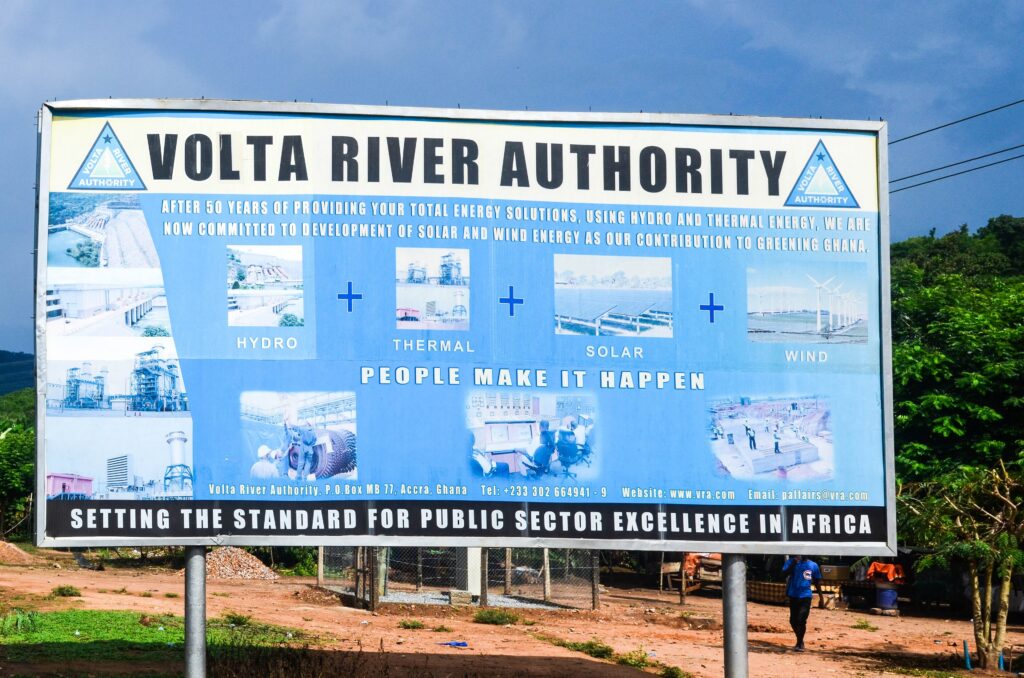
This transformation in energy infrastructure in Ghana appears out of sync with the imagination of energy in the early twenty-first century. Instead of a linear transition from fossil fuels to renewables, Ghana experienced an accumulation of various kinds of energy infrastructure with varying and changing degrees of importance to its economy. Each project constituted diverse political rationalities, mobilising various geopolitical and geoeconomic goals in the process.
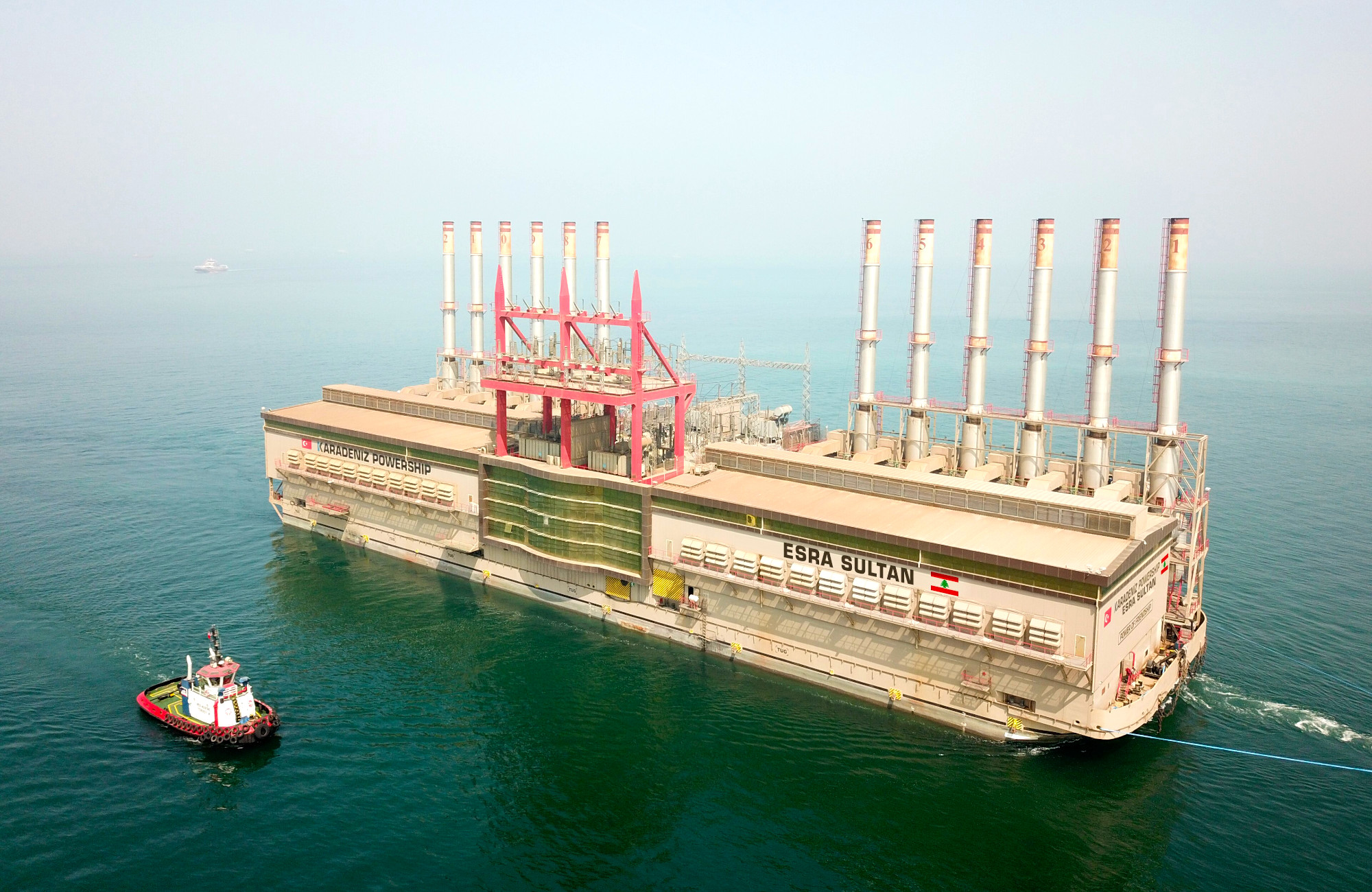
Paul, an energy specialist I met in Accra in January 2020, recognised the linearity of the dominant energy transition narrative. “Maybe we are transitioning in reverse,” he said. Indeed, many of Ghana’s generating plants, powered by natural gas and heavy fuel oil, had previously been used in countries like China and Turkey and had been broken down into pieces and transported in cargo ships to serve the Ghanaian grid.
The country’s first and largest independent power plant, Sunon Asogli, had been used in China between 1991 and 2007. The natural gas–fired plant started selling electricity to the Ghanaian grid in 2009 after its value had already depreciated. During a conversation in March 2023, one of the engineers at the Turkish-built Aksa power plant in Tema described their plant as a “museum,” referring to how they had collected used Wärtsilä engines from disused power production facilities in Turkey, Sri Lanka, and India and transported them in cargo ships to serve the Ghanaian grid.
Stranded assets of the energy industry, unwanted elsewhere, found their way to the Aksa plant in Tema’s Heavy Industrial Area. These plants may have been replaced with newer, perhaps more efficient plants in their places of origin, but they continued to produce electricity for Ghana. The infrastructures that were obsolete in other parts of the world became the basis of Ghana’s transition in reverse.
In some ways, Paul had accepted the linear narrative of a transition and expected a move from fossil fuels to renewable energy resources to take place in Ghana. Yet, given how the energy landscape he had observed closely did not correspond to the expected timeline of energy transition, Paul wondered if Ghana as a country was actually moving backward when it should be moving forward. Paul’s comment demonstrated how he maintained his investment in energy transition even when the concept of energy transition did not match everyday realities.
While the imagined transition to renewable energy sources is tempting, as it allows humans to extend existing social, political, and economic relations into the future while eliminating carbon emissions from fossil fuels, the evidence suggests that the development of renewable energy infrastructure only minimally displaces fossil fuels. As sociologists Richard York and Shannon Elizabeth Bell contend, “historically, no established energy source has undergone a sustained decline with the addition of a new energy source. Rather, consumption of all energy sources has typically grown, a trend that has been maintained for over two centuries.”
York and Bell make a second important point, suggesting that “adding new energy sources may, in some circumstances, actually accelerate consumption of other resources, even in areas outside the energy sector”. Using whales as an example, they overturn a standard narrative regarding how the use of fossil fuels in the last decades of the nineteenth century might have helped whale populations:
"the discovery of petroleum did not suppress whale oil consumption, helping to save the whales; rather, it actually spurred a dramatic increase in whaling. This increase occurred because fossil-fuel-powered ships could catch more and larger whales more rapidly than could sail ships and rowboats, and new uses were developed for whale oil (e.g., for margarine after the development of hydrogenation)."
In this context, new fuels such as petroleum contributed to the growth and development of former resources, such as whales, for new purposes. The whaling industry peaked in the 1960s, a century after the advent of fossil fuels, with about 80,000 whales being killed every year, and only came to an end in the 1980s through the adoption of a moratorium on commercial whaling due to the significant decline in whale populations.
Others have echoed York and Bell’s critique of the energy transition narrative, suggesting that the term transition should be reevaluated, as “the advent of new sources of energy does not lead to the abandonment of earlier sources”. Instead, energy accumulates, rendering the Ghanaian case emblematic of energy dynamics globally.
Why is energy transition such a popular notion? The promise of energy transition acts more as a myth than as an empirically viable explanation. However, the literature on energy and climate change is laden with this perspective and even features a subdiscipline called transition management.
Much of the scholarship in this field stresses how the world is decarbonising thanks to advances in renewable energy power stations. According to York and Bell, this labeling is mainly due to a “common mistake made in analyses documenting so-called energy transitions,” where scholars focus on “the proportion of the energy supply that is generated from various sources.” At the same time, the discourse on energy transition depoliticises and obscures a wide variety of social, political, and ethical transformations.
Despite its force as an ambition for the future, the idea of energy transition also cloaks how the fossil fuel industry makes claims for its staying power while deferring the phaseout of fossil fuels and seeking to reinvent itself.
This article is an edited excerpt from Gökçe Günel’s new book ‘Floating Power: Energy, Infrastructure, and South-South Relations’, published in April 2026. Buy a copy here.
Copyright Duke University Press, 2026.
Gökçe Günel is Associate Professor in Anthropology at Rice University. Her work investigates how infrastructure transforms in the face of energy and climate change-related challenges.