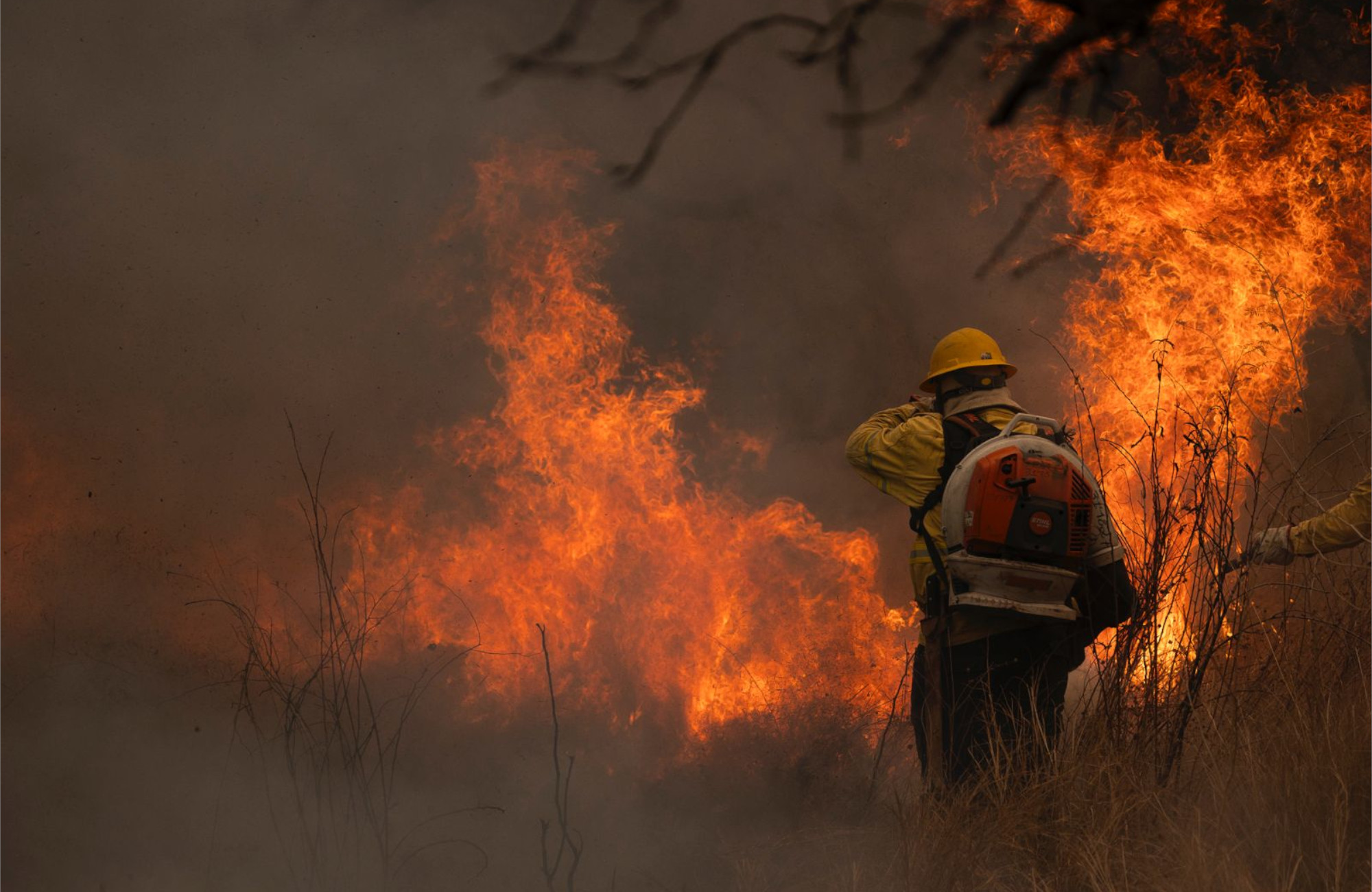
In the weeks before delegates arrived at this year’s climate conference in Belém, the country burned. Wildfires devoured the precious Brazilian landscapes that became COP30’s backdrop, spreading across the Amazon, the Cerrado and the Pantanal. In early September alone, Brazil recorded more than 68,000 fire alerts, an inferno engulfing an area larger than the United Kingdom.
Indigenous firefighters fought back against this year’s wildfires in the Pantanal, including with drones provided by the Environmental Justice Foundation (EJF). They courageously battled flames to defend their own homes, and to protect one of the planet’s greatest carbon sinks and most biodiverse ecosystems.
The Pantanal is the world’s largest tropical wetland, and it teems with wildlife. Spanning Brazil, Bolivia, and Paraguay, it is home to the world’s largest flying parrot (the hyacinth macaw), the genetically unique maned wolf, the green anaconda (a snake so large it feeds on deer), and a higher density of jaguars than anywhere else on Earth.
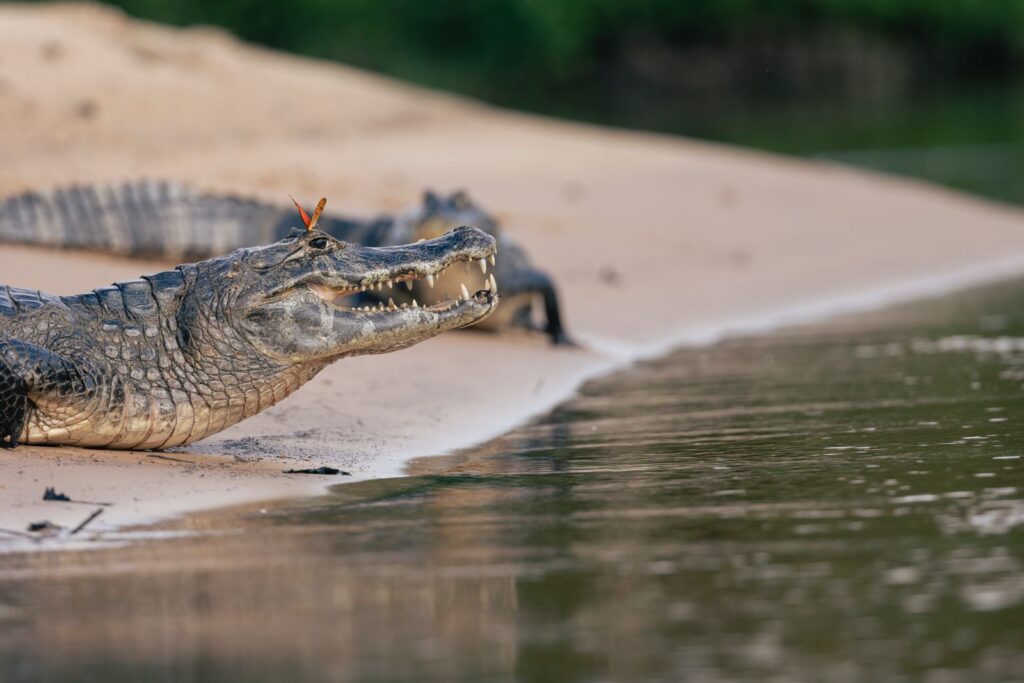
This ecosystem lives and dies by the ebb and flow of its water. It depends on the transience of its floods, which provide exceptional wildlife habitats as they submerge and reveal the land beneath them. This unpredictability in water level has also helped to keep agriculture at bay. As the Pantanal dries out and water levels stabilise, encroachment by soy plantations and cattle ranches takes hold.
Unnatural disaster
The overwhelming majority of blazes begin on private farms; these fires are not natural disasters, but human decisions. Land is torched to make way for more pasture, for more cattle, for more exports. Every hectare lost means more carbon released, more biodiversity erased, and more communities forced to fight for their survival.
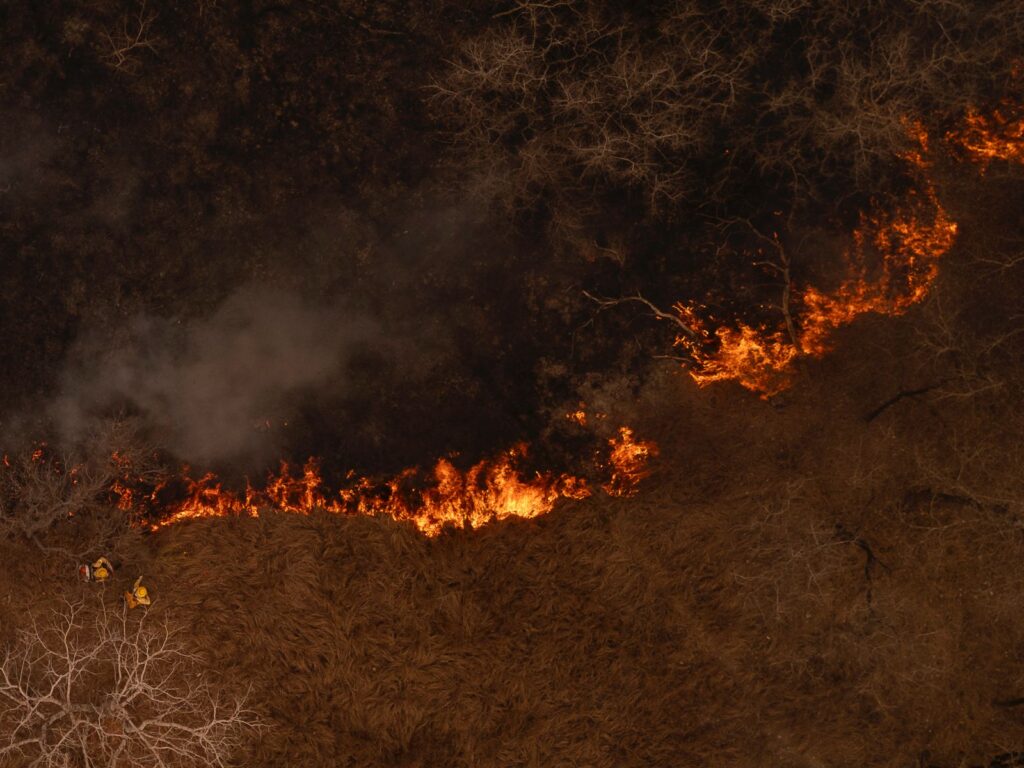
EJF interviewed Indigenous activists living in the region under condition of anonymity, to protect their safety. One said they “live in a reclaimed area and always hear gunshots from the neighbouring farm.” Another described how drones have become “a tool to defend ourselves.”
Fires have impacted every Indigenous territory in the Pantanal: one of the worst hit has been the Guató tribe, who lost 90% of their land in the 2020 fires. These are not isolated stories; they are cries from the frontline of a crisis that the world refuses to see.
One minute to midnight for nature’s Doomsday Clock
It is well known that forests store carbon, but too few realise that peatlands, marshes, mangroves, swamps and floodplains are the true carbon powerhouses of the natural world. Wetlands cover just 6% of Earth’s land surface, yet store most of its soil carbon. From 2000 to 2020, wetlands sequestered an average of one billion tonnes of carbon per year.
Wetlands are also vanishing three times faster than forests. Over the past half-century, humans have drained and destroyed more than a third of the world’s wetlands, largely for agriculture or urban expansion. Peatlands are being drained and burned to the point where they now emit more than 1.9 billion tonnes of CO₂ annually.
These are nature’s ticking carbon bombs, and the wildfires increasingly spreading across the globe could be the match that sets them off. In Indonesia, home to some of the world’s largest tropical peatlands, fires are used to clear land cheaply for plantations. When peat burns, it releases staggering amounts of carbon and destroys ecosystems that have evolved over millennia. Indonesian experts clearly state that if we do not tackle industrial-scale land clearing, we will lose these peatlands forever.
Above: Trailer for EJF’s 2025 feature documentary, ‘Pantanal’.
In the Congo Basin, the world’s largest tropical wetland carbon sink, climate change is dramatically increasing the risk of fires. The threat, scale and severity of fires are expanding globally, putting ecosystems and livelihoods at growing risks, even in areas where fires were not previously a major concern. An alarming study of fire trends in the tropical forests of Central and West Africa revealed that active fires have doubled over just 18 years.
In 2020, fires in the Pantanal killed an estimated 17 million wild animals and emitted 115 million tonnes of CO₂ – more than Belgium’s total emissions that year. Wetland burning on this scale harms humanity just as it harms wildlife: wetlands regulate our climate, store our water, and shield us from droughts and floods. Without them, our planet becomes hotter and drier, and when the rains finally come, the floods are more devastating.
A promising year for wetlands diplomacy
COP30 was billed as the “Amazon COP” and Brazil promised to show that the world’s largest rainforest nation could also be its greatest defender. Alongside the pledges for forest protection, calls were also heard from Brazilian lawmakers and international leaders for the protection of the Pantanal.
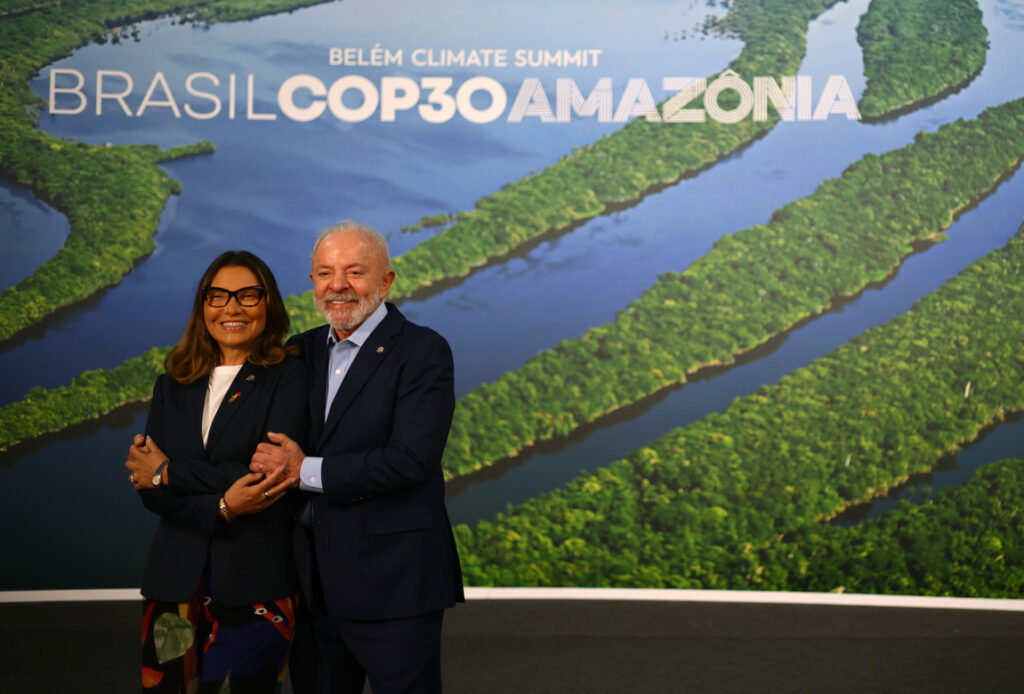
These advocates recognised that wetland protection should have been the heart of COP30. Brazil’s First Lady, Janja da Silva, proved a frequent ally for wetlands at the climate talks, including receiving an open letter from EJF and other civil society groups, scientists and Indigenous organisations calling for the protection of wetlands.
Germany joined Peru and Uganda in championing the Peatlands Breakthrough initiative at COP30 which, among other targets, aims to rewet and restore at least 30 million hectares of peatlands by 2030. Progress was also made at the UNFCCC Ocean and Climate Change Dialogue in the summer, including the call from several countries for better monitoring of blue-carbon ecosystems. Thanks to these combined efforts, wetlands have finally begun to receive the attention they deserve in 2025.
Despite the severity of current conditions, I do believe progress on wetland protection is within reach, and I believe these political decisionmakers do too.
Rewetting drained peatlands and restoring their natural water levels stops the release of CO₂ almost immediately. Studies show that delaying rewetting has a far greater long-term warming effect than any short-term methane emissions from restored wetlands. In short: if we want to meet the Paris Agreement targets, we must rewet, protect and expand our wetlands with immediate effect.
Formal wetlands targets have not yet been achieved, but the pledges made at both COP30 and UNFCCC this year could form the backbone of future wetlands protection. It is critical that this work proceeds without delay.
What will wetlands protection look like?
Justice must be at the centre of this effort. That means protecting the rights of Indigenous peoples and local communities, who are the most effective guardians of wetlands like the Pantanal. It means holding companies accountable for the fires they ignite and the land they destroy. It means building international cooperation that treats wetlands as the global public good they are, from the Pantanal to the Congo Basin, from the Okavango in Botswana to the peatlands of Indonesia and the fens of Europe.
There is still time to rescue and protect global wetlands, but we must act quickly. Governments must urgently commit to a Global Wetlands Pact, which would be a binding framework for conservation, restoration and finance. Climate funding should be redirected to keep carbon in the ground and ecosystems alive.
Wetlands are not wastelands. They are the living, breathing infrastructure of our planet. They purify our water, nurture our food systems, protect our homes from floods and droughts, and keep our climate stable. We now need governments and businesses to act and ensure the protection of our wetlands – our job is to demand that they do.
Steve Trent is CEO of the Environmental Justice Foundation.