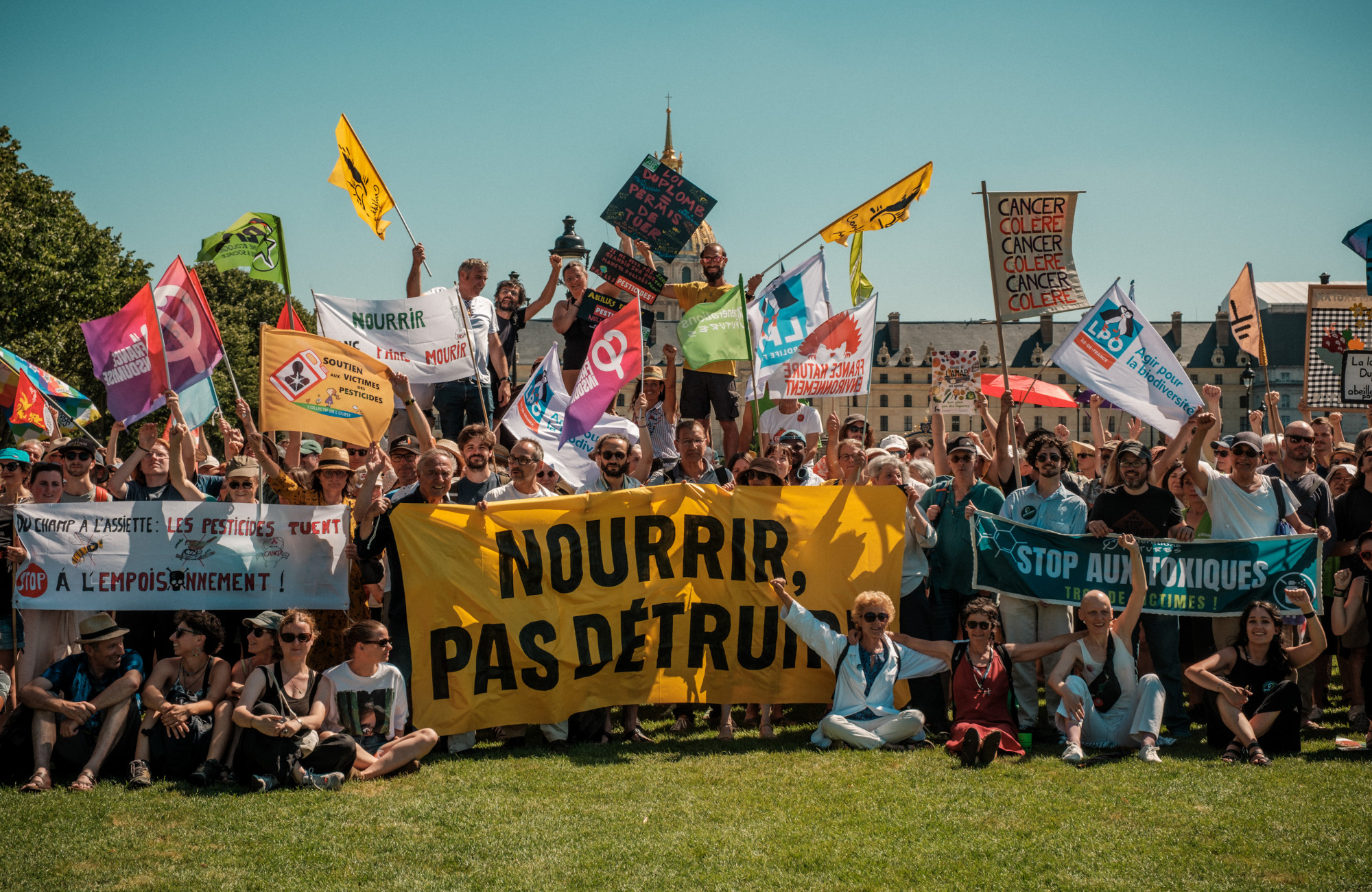
In July, a petition created by a 23-year-old masters student from Bordeaux appeared on the website of the French National Assembly. It took aim at a farming law the French parliament had passed earlier that month, describing it as a “scientific, ethical, environmental and health aberration”.
In just over a week, the petition had attracted 500,000 signatures, the threshold necessary to trigger a debate in the national parliament. Ten days later it had surpassed two million, making it the second largest petition in French history. The “loi Duplomb” – named after Laurent Duplomb, the conservative senator who devised it – had become a political scandal.
The law at the centre of this historic political mobilisation has been controversial in environmental and agricultural circles since its introduction to the French parliament late last year. Ostensibly designed to alleviate pressure on farmers by cutting regulatory red tape, the loi Duplomb has been widely criticised as an attack on environmental and public health standards. Most controversial amongst its articles was the proposed reintroduction of acetamiprid, an insecticide thought to be carcinogenic that was banned in France in 2018.
“To add your signature to a petition on the National Assembly website, you have to identify yourself formally. The signatures are verified and authenticated, it’s an official process,” explained Jean-Louis Roumégas, National Assembly representative and member of the Écologiste party.
“The fact that we had more than two million signatures in less than three weeks shows how many people are very worried about the rollback of environmental and health standards,” he said.
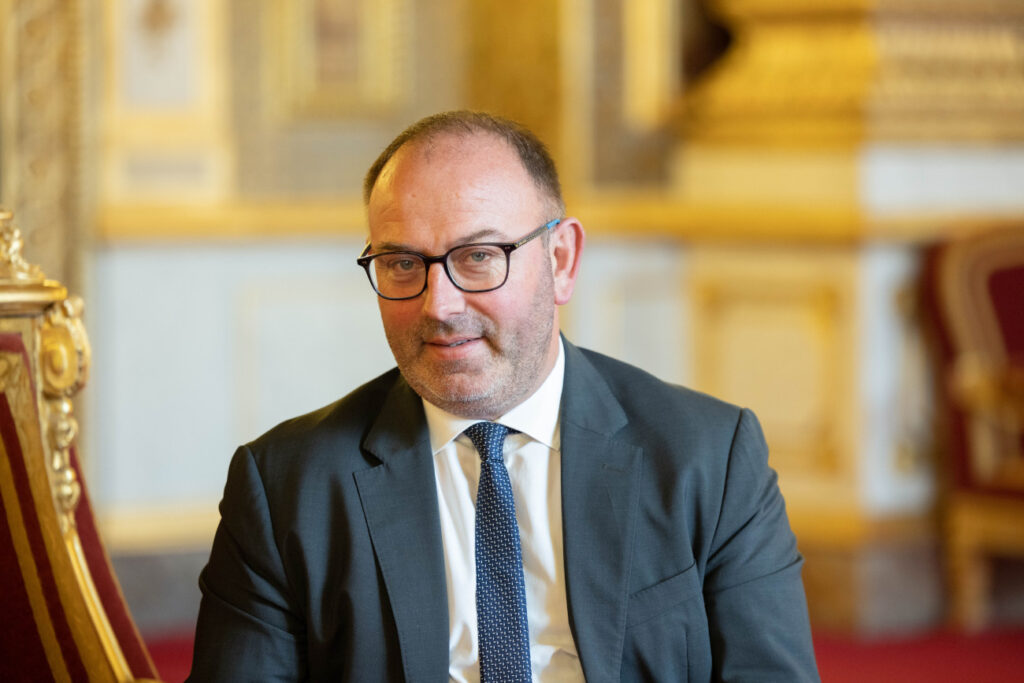
The petition is not the only opposition the law has encountered. Earlier this month, the Conseil Constitutionnel – the highest constitutional authority in France – was called upon to assess whether the law was in violation of the French constitution, following referrals from left wing groups in the National Assembly and the Senate, and a letter from a dozen NGOs.
In a highly anticipated ruling on 7th August, the council found that the reintroduction of acetamiprid was in fact unconstitutional, but it left much of the rest of the law unchanged.
“We were pleased that at least this article had been withdrawn from the law,” said Aurélien Mourier, president of the Ardèche Chamber of Agriculture. “But it is only one article, and the spirit of the law – one that drives agriculture further into industrialisation and destroys rural ways of life – hasn’t changed”.
"A very bad sign"
While the reintroduction of acetamiprid was the catalyst for public outrage, several of the legislation’s other clauses remain controversial. One of these is the introduction of a “major public interest” status for megabasins.
Megabasins are large artificial water reservoirs that are intended to ensure sufficient water supply for crop irrigation in regions of France that are susceptible to water scarcity. They are created and used by large-scale intensive farms and have been criticised for increasing pressure on water resources and harming biodiversity.
Affording megabasins major public interest status will mean they can be built in areas where protected species are found.
Pierre-Yves Maret, spokesperson for the Ardèche divsion of the Confédération Paysanne farming union, said the law’s provisions around megabasins amount to “the privatisation of water for the benefit of a handful of people”.
“It signals a move away from the idea of water as a common good that belongs to everybody, with it instead becoming the property of a select few,” Maret said.
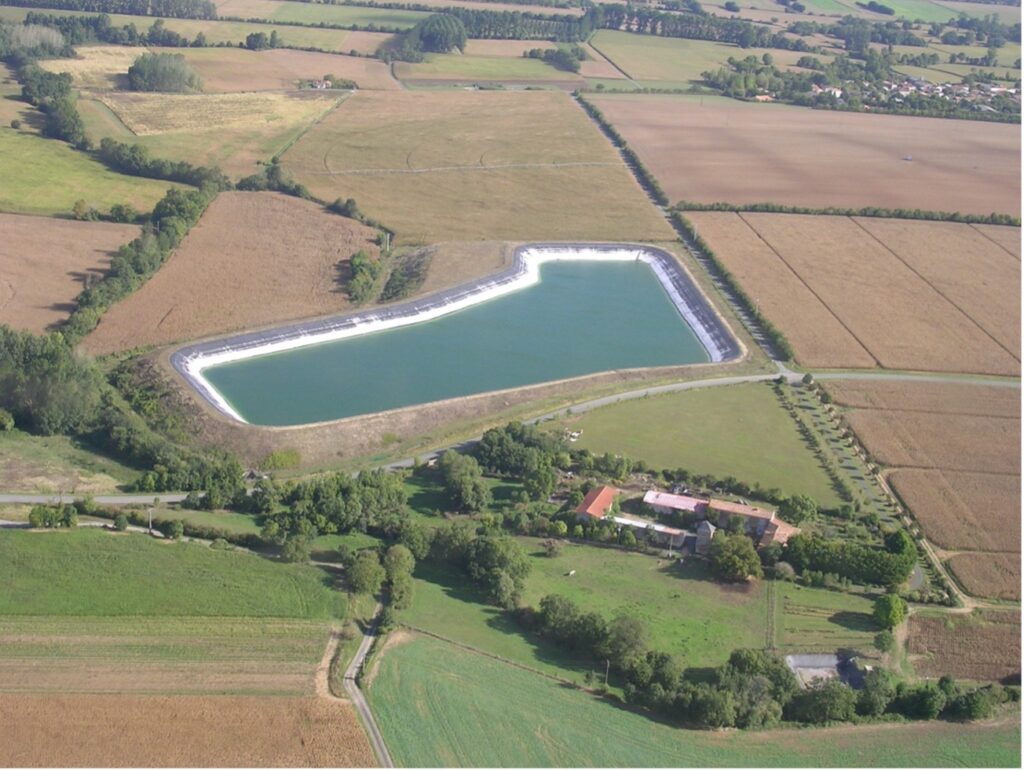
While the ruling of the Conseil Constitutionnel pared back some of the provisions around megabasins, most notably preserving the right to launch legal challenges against their major public interest status, many remain worried that the law will skew access to water in favour of intensive agriculture.
“It’s a capture of resources that will destabilise existing modes of operation. It’s not in the general public interest but instead stands to benefit only a handful of industrial farms,” said Éric Piolle, mayor of Grenoble and spokesperson for the French green party, Les Écologistes.
The law’s provisions around animal agriculture have also garnered criticism. Under Article Three, the loi Duplomb will increase the quantity of livestock a farm is able to hold before being subjected to certain environmental regulations: from 40,000 to 85,000 chickens and from 2,000 to 3,000 pigs.
“The law enables farmers to effectively double the number of chickens or pigs they hold without having to abide by more rigorous environmental regulations, which is extremely problematic,” said Aline Aurias, who farms aromatic herbs and is a spokesperson for the Confederation Paysanne’s Île-de-France division.
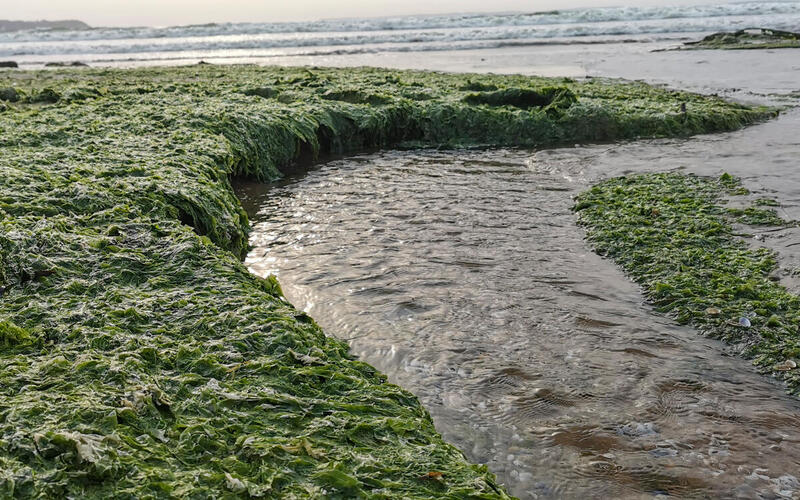
“There are already serious problems with the proliferation of green algae on the beaches of Brittany – in large part tied to intensive animal agriculture – and yet we are looking to further intensify livestock farming. That’s not even to mention the increased risk of Zoonosis that comes with larger herds,” Aurias added.
Zoonosis is the transmission of infectious diseases from animals to humans, caused by specific pathogens that can jump between the two.
According to Aurias, the law will benefit very few farmers: “less than 3% of French farmers are limited by the current thresholds around animal herd sizes. It’s a handful of very large farms which are slightly blocked by environmental standards for whom this law is a huge gift. It changes nothing for the vast majority of livestock farms and farmers”.
Aurélien Mourier said that the law “sends a signal to farmers that what is preventing them from achieving a good living standard is that their farms are too small. It’s a message that has been pumped out for decades, but the reality is that farmers look at their livestock and think ‘I’m not any better off than I was twenty years ago when I had half as many cattle”.
“What farmers really need is to be able to live off a manageable sized herd, but this law proposes the complete opposite of that. Its nonsensical on an economic, environmental and citizen level. It’s a very bad sign,” Mourier added.
Revolving doors
When conservative senator Laurent Duplomb introduced the legislation to parliament alongside fellow lawmaker Franck Menonville, it was with the purported intention of addressing the grievances that sparked farmers protests across France and much of Europe last year.
But according to a large swathe of the agricultural sector, the loi Duplomb does little to address these grievances.
“Many farmers in France live below the poverty line. Large numbers work dozens and dozens of hours each week without even attaining a minimum wage,” explained Fanny Métrat, spokesperson for the Confederation Paysanne and a livestock farmer.
“The demonstrations last year were about demanding a liveable wage for all and pushing the government to introduce economic measures to support farmers. But the loi Duplomb does not respond at all to this central issue of guaranteeing a fair minimum price to farmers,” said Métrat.
For politicians like Mayor Éric Piolle, it is only large-scale industrial agriculture that stands to benefit from the law, in large part thanks to the close relationship between the dominant lobby group – the Fédération Nationale des Syndicats d’Exploitants Agricoles (FNSEA) – and the government.
According to Piolle, the FNSEA “runs the world of French agriculture in partnership with the ministry of agriculture”. Their vision is “the advancement of a model of agriculture that is industrialised and profit driven. It is a model that does not serve individual farmers, the general public interest, public health or the stability of food supply in France”.
The revolving door between the lobby group and the government is hard to overlook. Laurent Duplomb is himself a former regional director of the FNSEA, and in July Xavier Jamet – the lobby’s director of public affairs – became chief of staff to government spokesperson Sophie Primas.
According to Fanny Métrat, the Minister for Agriculture Annie Genevard herself maintains very close relationships with the lobby group: “Many deputies within the agricultural commissions say that before approving any proposal or making any decision, the minister will call up the president of the FNSEA to make sure they are happy with it”.
Neither the FNSEA nor the French Ministry for Agriculture responded to requests for comment.
"More than worrying"
If the significant influence of the FNSEA has proven troubling to left wing politicians and small-scale farmers, elsewhere the loi Duplomb has also raised more fundamental questions about the robustness of the French democratic process.
When the law was in plenary session earlier this year, right wing lawmakers invoked the “motion de rejet préalable” (“motion of preliminary rejection”) to avoid parliamentary debate on the bill.
In doing so, MPs from the centre to the far right voted for a rejection of their own text, sending it directly to the “Commission Mixte Paritaire” (“Joint Committee”) and circumventing amendments to the bill tabled by left wing and green MPs. The Joint Committee – where the right is in the majority – then passed the bill.
“The approach used by the right was fundamentally wrong,” says Dominique Potier, Socialist party representative at the National Assembly.
“Preventing debate in the National Assembly is intolerable. It’s more than worrying, it’s a very serious attack on democracy”.
Tensions around the law have at points erupted into violence, with several Green MPs seeing their offices vandalised by supporters of the loi Duplomb.
“It was interesting because we actually found a lot of common ground on the subjects that most concerned them,” said Roumégas. “Free trade arrangements, for example, are a huge issue for them, as they enable the import of products from all over the world that compete with their own. Large retailers which force them to accept very low prices for their goods are another.
“We talked about this economic system and found that there was a lot of convergence in our views and that we need to find a way out of this sterile, combative dynamic of ecologist vs agriculturalist. That was the objective of the debate,” said Roumégas.
While Jean-Louis Roumégas may have found common ground with the law’s supporters in his constituency office, the loi Duplomb remains a highly divisive and fractious issue in French environmental and agricultural politics.
For some small-scale farmers and politicians on the left, a move away from an agro-industrial approach is more urgent than ever.
“This summer we’ve seen temperatures reach 42-43 degrees. We’re now in the middle of what we’ve been anticipating for years – the arrival of climate change – and it’s going to get worse and worse,” said Pierre-Yves Maret.
“Until we make the choice of trying other agricultural and economic models, farming and farmers’ livelihoods are just going to become harder and harder to sustain”.
This article was updated on 9th September 2025 to reflect that Aline Aurias is a spokesperson for the Île-de-France division of the Confédération Paysanne and that Pierre-Yves Maret is a spokesperson for the Ardèche division.
Camille Corcoran is Assistant Editor at Land and Climate Review, based in Paris. She has published investigations with outlets including the BBC, The Guardian, Channel 4, The Times, The Independent, Private Eye and openDemocracy.