This article is an edited excerpt fro m Mark Jacobson’s new book, Still No Miracles Needed, published by Cambridge University Press in January 2026. Click here to buy a copy and recieve 20% off using the discount code “NOMIRACLES20”.
Table of Contents
A proposal to help solve the climate problem that does little more than keep the fossil-fuel and bioenergy industries in business is to capture carbon dioxide emitted from stationary fossil-fuel, bioenergy, and chemical emission sources before the gas escapes from the exhaust stack. The carbon dioxide is then piped and either stored underground (CCS) or used by industry (CCU).
By the end of 2023, carbon dioxide was actively being captured in 41 projects worldwide: 15 fossil-gas-processing facilities, three coal-fired power plants, two oil refineries, four ethanol refineries, six chemical plants, one iron-and-steel manufacturing plant, seven facilities for producing hydrogen from fossil gas for ammonia production, two multisource carbon dioxide pipelines, and one direct-air-capture plant. Of all the carbon dioxide captured among these projects, 82.1% was used for enhanced oil recovery. The rest was sequestered underground.
The maximum possible capture capacity among these 41 projects was 64.8 million tonnes of carbon dioxide per year, which is only 0.17% of the 38.5 billion metric tonnes per year emitted in 2022 due to fossil-fuel combustion and chemical reactions.
That figure does not include the carbon dioxide going to enhanced oil recovery which is released back to the air (between 47% and 109%), nor does it account for actual capture rates (which range from 10% to 80% of the maximum capture capacity). With these reductions, the 41 projects capture an average of 0.045% of world emissions.
As of 2024, only two fossil-fuel power-plants with carbon-capture equipment had sufficient public data to analyse. These projects, plus a third – which was the largest carbon capture project in the world at the time – are discussed below. All three captured little carbon and increased air pollution and fossil-fuel mining.
Boundary Dam Power Station, Canada
The first electric-power plant with carbon capture and use equipment was the Boundary Dam power station in Estevan, Saskatchewan. This plant has been operating with CCU equipment on one coal boiler connected to a steam turbine since October 2014.
The cost of the retrofit project was $1.47 billion, which included a $240 million subsidy from the Canadian government. The remaining $1.23 billion was paid for by electricity customers as an additional charge added to their normal bills.
From 2015 through the end of 2023, the average carbon dioxide capture efficiency from the exhaust stream of this plant was 57%. During some years, it was as high as 66%, in others, as low as 36%. The captured carbon dioxide has all been sold for enhanced oil recovery.
Of all carbon dioxide used for enhanced oil recovery, 30–40% is lost during carbon dioxide transport to and processing within the oil field. Another 20–80% is emitted due to the additional oil produced, depending on whether it is replacing other oil or is new oil. That means that only some or none of the original coal-plant emissions are stored underground, on average, and the rest are released to the air.
Read our series of long reads explaining CCUS:
The Boundary Dam project also required the coal plant to produce 25% more electricity just to run the carbon-capture equipment, and this too resulted in 25% more coal mining, combustion, and emissions. None of the carbon dioxide or air pollution from the mining of the coal was ever captured.
Petra Nova, USA
The second coal plant with carbon-capture was the W. A. Parish coal power plant near Thompsons, Texas. The plant was retrofitted with carbon-capture equipment as part of the Petra Nova project and began using the equipment during January 2017.
The carbon-capture equipment received 36.7% of the emissions from a 654-megawatt boiler at the coal plant. The equipment required almost 0.5 kilowatt-hours of electricity to run for every 1kWh produced by the coal plant. An entire fossil-gas turbine with a heat-recovery boiler was built to provide this electricity. A cooling tower and water treatment facility were also added. The retrofit cost $1 billion ($4,200 per kilowatt) beyond the coal-plant cost. Due to poor economics, carbon capture was halted at the plant in December 2019.

During operation, captured carbon dioxide was compressed and piped to an oil field, where it was used to enhance oil recovery. Carbon dioxide from the fossil-gas turbine was not captured. The mining and transport of fossil gas also emitted uncaptured carbon dioxide, methane, and air pollutants. Upstream carbon dioxide, methane, and air pollutants from the coal plant itself were also uncaptured. Most of the carbon dioxide that was captured was released back to the air during enhanced oil recovery.
Specifically, during 2017, only 55.4% of the carbon dioxide from the coal-combustion exhaust was captured. When uncaptured carbon dioxide from fossil-gas combustion and uncaptured carbon dioxide and methane from mining and processing the coal and fossil gas used are also accounted for, the overall capture rate of CO2-equivalent emissions was only 10.8% over a 20-year time frame and 20% over a 100-year timeframe. Of the carbon dioxide captured, 47–109% was then emitted back to the air during enhanced oil recovery.
The capture efficiency from the coal exhaust was slightly higher over the entire three-year operation than it was in 2017 (65% rather than 55.4%). This does not change the conclusion that this project resulted in virtually no reduction in CO2-equivalent emissions, and that it led to increased fossil-gas mining and air pollution.
Using wind instead of fossil gas to power the carbon-capture equipment could have reduced CO2-equivalent emissions before enhanced oil recovery by 37.4% over 20 years and 44.2% over 100 years, versus no capture, which is a greater reduction than with gas. The decrease is greater because wind results in no fossil-gas mining or combustion emissions.
Using this wind electricity to replace coal electricity directly, instead of powering carbon-capture equipment, would reduce CO2-equivalent emissions over both 20 and 100 years by 49.7%. It is always better to use new wind, water or solar (WWS) electricity to eliminate a carbon dioxide source and thus prevent carbon dioxide from being emitted in the first place, than to use the same WWS electricity to extract carbon dioxide from the source with carbon capture.
The climate benefit of using WWS electricity to replace fossil-fuel electricity (instead of to power carbon-capture equipment) is only part of the story. Carbon capture does not reduce any air pollution from the coal plant or coal mine. Instead, it increases air pollution when a fossil fuel is used to provide power for the capture equipment. Even when wind powers the capture equipment, air pollution continues from the coal plant and coal mine. Only when wind replaces the coal plant itself does air pollution from both the coal plant and coal mine decrease.
In sum, the social cost (equipment plus health plus climate cost) of coal-CCU powered by fossil gas is over twice that of wind replacing coal directly and even higher than that of doing nothing. The social cost of using wind to power CCU equipment is also much higher than using the same wind to replace a coal plant.
In other words, the best strategy is to use WWS to replace fossil fuels. This conclusion is independent of the fate of the carbon dioxide after it leaves the carbon-capture equipment (storage or use), and this applies to carbon capture with bioenergy or cement manufacturing as well.
Gorgon – Chevron, Australia
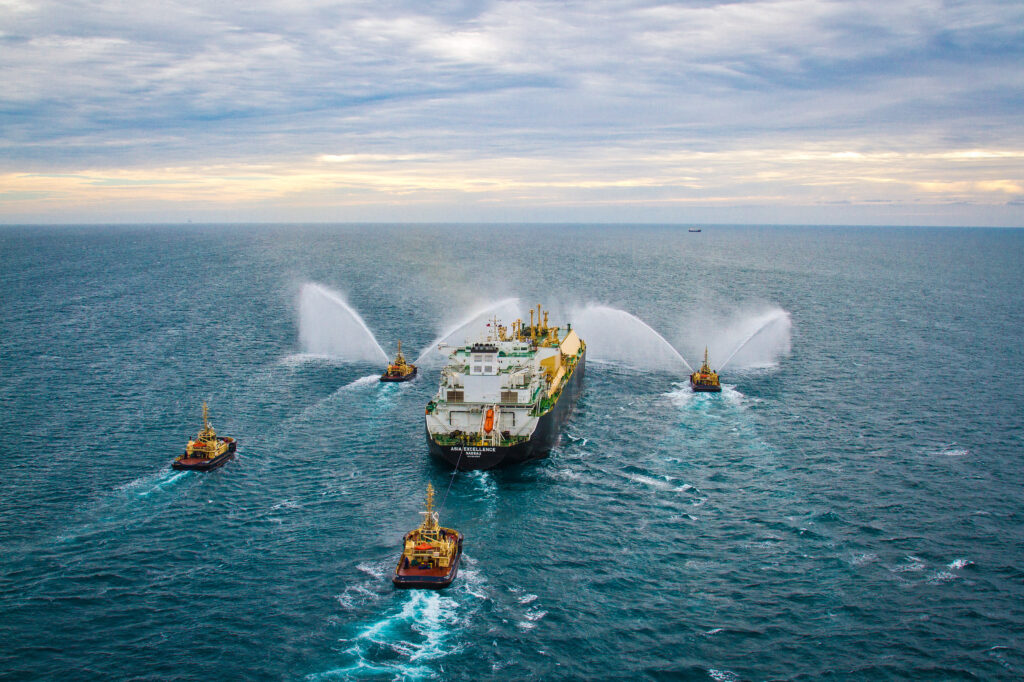
A third project is the world’s largest carbon capture and storage plant, which is attached to the Gorgon liquefied natural gas (LNG) facility on Barrow Island, 130km off the northwest coast of Australia.
On 21st March 2016, the facility started converting a portion of the extracted gas to LNG for export and using the rest for local consumption. The raw gas from the Gorgon field near Barrow Island contains about 15% carbon dioxide. The Australian government permitted the LNG facility on the condition that 80% of the carbon dioxide be captured and injected two kilometers below Barrow Island, starting the day LNG exports commenced. The CCS equipment cost $3 billion.
Delays prevented capture and injection until August 2019. Inefficiencies and problems limited capture rates thereafter. As a result, over the five years between 2016 and 2021, only 32% of the carbon dioxide emitted from the LNG facility exhaust stream was captured. The rest was released to the air.
A portion of the fossil gas for domestic consumption provided electricity to run the CCS equipment. The burning of this gas emitted enough carbon dioxide to cause the net carbon dioxide emissions from the CCS facility to be positive. Thus, instead of reducing it, the Gorgon CCS plant likely increased carbon dioxide emissions – at a cost of $3 billion.
Carbon capture is not a zero-carbon technology
For the same energy cost as carbon capture, wind turbines and solar panels replacing fossil fuels reduce much more carbon dioxide. They also eliminate fossil-fuel air pollution and mining, which carbon capture increases.
Using renewables to replace fossils also reduces oil-and-gas pipelines, refineries, gas stations, tanker trucks, oil tankers, coal trains, oil spills, oil fires, gas leaks, gas explosions, and international conflicts over energy. Carbon capture increases these by increasing energy use.
When the fate of captured carbon dioxide is considered, the problem deepens. If carbon capture is used to enhance oil recovery, its current major application, 47–109% of the captured CO2 is released back to the air. If the captured carbon dioxide is used to a create carbon-based fuel to replace gasoline and diesel energy is still needed to produce the fuel, the fuel is still burned in vehicles (creating pollution), and little net carbon dioxide is captured. A fourth application is to use the carbon dioxide to produce carbonated drinks – most of this is released back to the air when the drinks are consumed.
We should recognise carbon capture for what it is: a ‘miracle’ technology that causes more harm than good, serving primarily as a means for the fossil fuel industry to reinvent itself.
This article is an edited excerpt from ‘Still No Miracles Needed’, published in January 2026 by Cambridge University Press. Click here to buy a copy and recieve 20% off using the discount code “NOMIRACLES20”.
Dr Mark Jacobson is a Professor of Civil and Environmental Engineering and Director of the Atmosphere and Energy Program at Stanford University. He is also a co-founder of The Solutions Project, which advocates for 100% clean and renewable energy systems.
Read more: