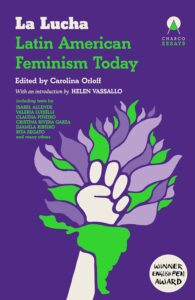
 This article is an edited excerpt from an essay originally published in‘La Lucha: Latin American Feminism Today’, available here from Charco Press.
When my mother was murdered on the 2nd of March 2016, she died as she lived: as the General Coordinator of the Civic Council of Popular Indigenous Organisations (COPINH).
She and I share first names – Berta Isabel – and belong to the Lenca people who live in the southwest region of Honduras. My mother co-founded COPINH in 1993 to identify and defend communities threatened by corporate exploitation of rivers and mountains. So, I grew up surrounded by organising.
The events that led to my mother’s death began in 2013, when she fell in love with a river and the people defending it. On 1st April 2013, the community of Rio Blanco, to the north of Intibucá, began a highway blockade against an illegal licence granted to a hydroelectric dam project named Agua Zarca, on the sacred river Gualcarque.
Dozens of assemblies were organised to devise actions to stop the construction of the dam. At the same time, the company leading the bid began to take actions to suppress opposition. The police, the military and private security forces carried arms amongst us and made their threatening presence known. The company paid people to attack our leaders or to become informers.
In the face of this onslaught, my mother recognised the determination of a group that may have been impoverished but was prepared to give its life for the river. She understood that the criminals who intended to control, commodify, and exploit the river were the manifestation of what we spoke about in COPINH: the capitalism, racism and patriarchy that trample on dignified life.
Within three months of the blockade starting, legal charges were brought against my mother by DESA, the company that owned the licence to build the dam. They thought they could weaken her, and that this would weaken the defence of Rio Gualcarque. They were wrong.
The company was accusing her of causing “continuous damage”, of usurpation, and of coercion, to the tune of several million Honduran lempiras. In fact, as the communities and organisations that attended the hearings attested, these charges were part of a long process of criminalisation directed against women environmental defenders.
COPINH identified the people behind DESA, which brought them unwanted publicity. This included the president of the company, Roberto David Castillo Mejia, a member of the Atala family of Honduran oligarchs, with a history of involvement in military intelligence.
Later that month (July 2013), a soldier defending the company’s premises killed a community leader in front of over 200 people, and shot his young son three times.
This horrified everybody. It drove my mother to make further legal and public denunciations and to rethink the community strategy. It also frightened off a number of the original investors but, unbeknown to us, new actors appeared to plug the gap: the Central American Bank for Economic Integration (BCIE), the Dutch Entrepreneurial Development Bank (FMO) and the Finnish bank Finnfund.
For us, these banks were not only financing an illegal project but were also funding violence.
By the end of 2014, the struggle had intensified, and the company was forced to withdraw. My mother was threatened by members of the company, who told her that they knew where her children lived. They harassed her, spied on her, and followed her.
In April 2015, my mother received the Goldman Environmental Prize for her work to expel DESA from the river. On accepting the award, she called out, “Let’s wake up. Let’s wake up, humanity, there’s no more time!” We never imagined these would be the phrases for which she would be remembered after death.
DESA then moved premises to the other side of the river and claimed this was not Indigenous territory, so the communities in the north sector of Intibuca started to reorganise.
The threats, violence and surveillance increased. My mother was distressed, an unusual emotion for her. One afternoon she told me: “I think it will be very hard to win this struggle. We have only two real alternatives: either we deepen the territorial action to expel this company once and for all, or we carry out a big campaign to force the banks to withdraw funds.”

She said that if something happened to her, it would be the fault of the company, and specifically David Castillo, who constantly sent her messages telling her that he knew where she was, offering her projects in exchange for stopping the resistance and making subliminal threats.
In February 2016, in closed meetings, COPINH prepared a great act of mobilisation toward San Francisco de Ojuera, where the new premises were located.
A few weeks later, at around 6am on the 3rd of March, I found out that my mother had been murdered in her own home. The company had sent four gunmen, who broke in and shot her three times.
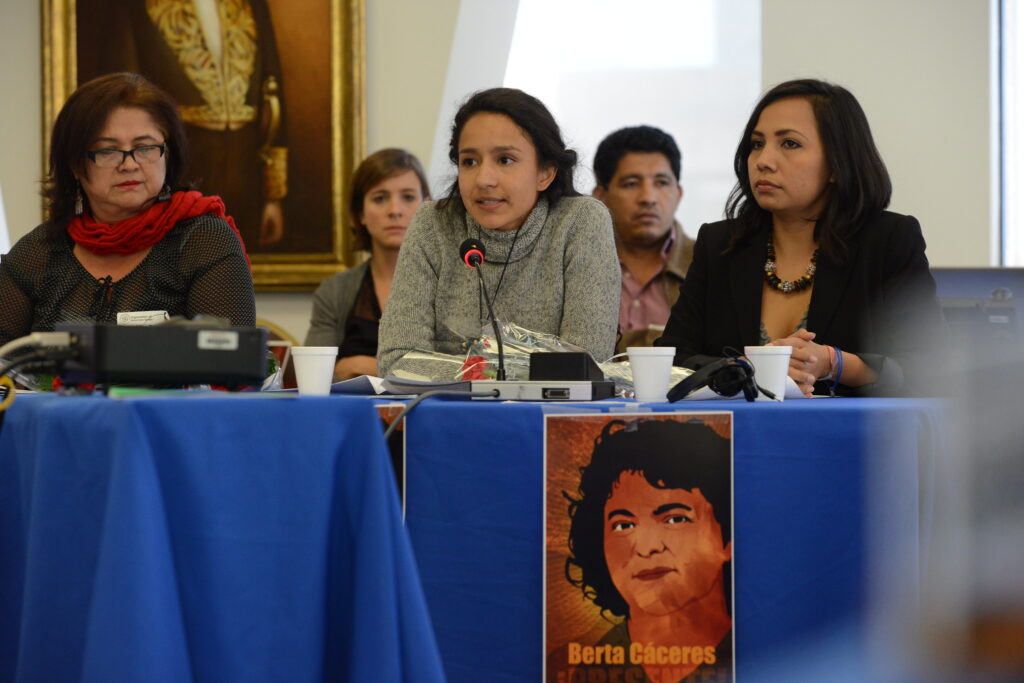
Since that day, I have dedicated all my efforts to achieving justice for her in a country in which crimes routinely go unpunished.
In the more than nine years since she was murdered we have not achieved the prosecution and sentencing of the masterminds behind this crime, but we have managed to jail eight of the killers and intermediaries. This includes David Castillo, the principal contact of the international banks, and four former soldiers.
Río Gualcarque remains threatened by the international banking industry, but for now its waters continue to flow freely. Our achievements are unprecedented, but the courts remain designed for the persecution of Indigenous peoples, and are too easily weaponised against us. We cannot rely on them to give us justice.
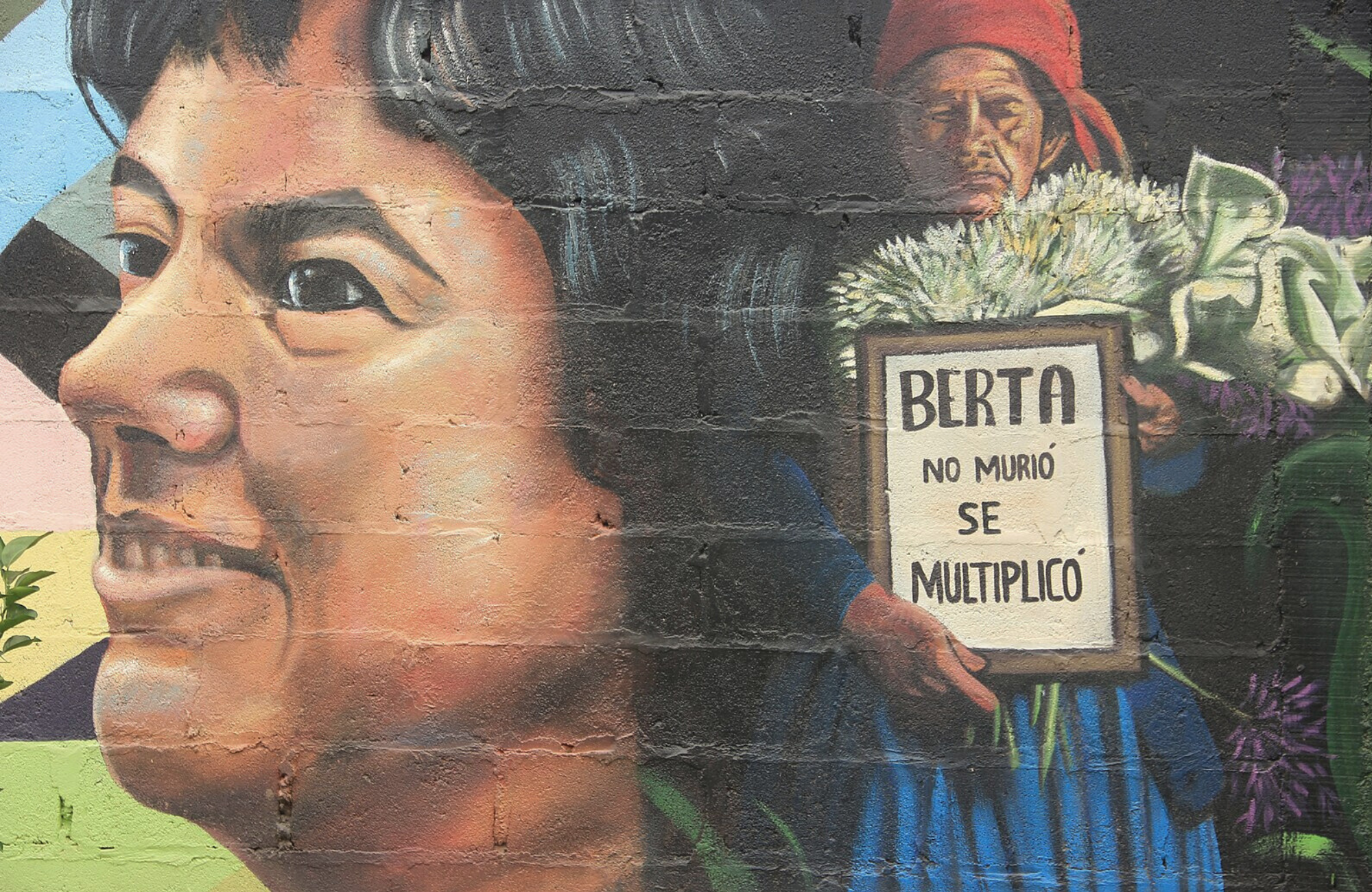
While I was nervously awaiting the verdict in one of the trials over my mother’s murder, I heard the voices of feminists who had supported her when she was alive and facing criminal charges herself. They shouted out across the courtroom: “Berta lives!’, ‘Berta didn’t die, didn’t die. Berta became millions, became millions. Berta is me!”
Originally translated from the Spanish by Jessica Sequeira, and included within ‘La Lucha: Latin American Feminism Today’, available here from Charco Press. Additional editing by Anna Spree for Land and Climate Review.
Bertha Zúñiga Cáceres is general coordinator of COPINH and an advocate for Indigenous collective rights, land access and territorial autonomy. She has continued her mother Berta Cáceres’ work.